
Summary
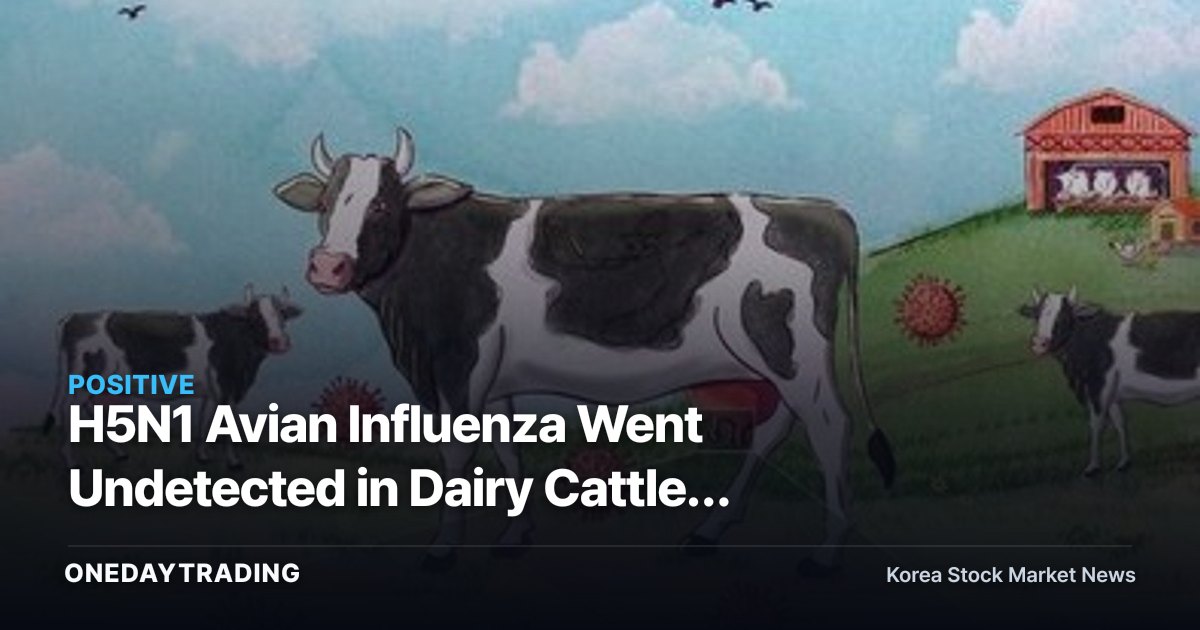
Scientists are uncovering why highly pathogenic avian influenza H5N1 went undetected for weeks at a Texas dairy farm in the United States in 2024. The key finding is that the virus concentrated in the mammary glands and milk rather than the respiratory tract, slipping through a blind spot in the existing surveillance system. From an investment standpoint, this signals that H5N1 risk—once confined to poultry—has broadened to mammals, a variable that could have a phased impact on the animal-vaccine, diagnostic-kit, and livestock disease-control themes, as well as on egg and poultry supply-demand (order flow).
The Full Story
What matters to investors here is not a simple piece of livestock-disease news, but the exposure of a structural flaw in the infectious-disease surveillance system. H5N1 has traditionally been recognized as a disease that rapidly kills poultry such as chickens and ducks, and disease-control and surveillance protocols were designed around respiratory symptoms and mass die-offs. In dairy cattle, however, this typical pattern did not appear.
Instead of clear respiratory symptoms, the cows showed non-specific signs such as reduced milk output and changes in milk consistency, while the virus was detected at high concentrations in mammary tissue and milk. While farms and veterinary authorities focused on respiratory samples, the actual source of infection lay along a different route. As a result, an accurate diagnosis was delayed for a considerable period after the initial spread, and the possibility of transmission via the milking process and equipment drew attention only belatedly.
The Structural Background
The crux of the matter is the distribution of viral receptors. Influenza viruses bind to specific cell-surface receptors to gain entry, and analysis suggests that the mammary tissue of dairy cattle provided the environment this virus favors. In other words, H5N1 may be able to adaptively establish itself in specific mammalian organs, suggesting that the cross-species barrier may be lower than previously assumed. This does not directly imply a risk of human infection, but it does create policy pressure to redesign which subjects are monitored and which body sites are sampled.
Impact on Stocks and Industry Sectors
- Animal vaccine and therapeutics makers: Companies such as Komipharm, Eagle Vet, and Jeil Bio tend to see expectations for vaccine and antiviral demand priced into their shares early during livestock-disease outbreaks. Confirmation of mammalian infection stokes hopes for an expanded scope of application, but actual revenue depends on government disease-control budgets and vaccination policy.
- Diagnostics and testing: Expanding the range of sampled body sites and introducing milk monitoring could translate into greater demand for diagnostic kits and testing, which is favorable for bio firms with animal-diagnostics businesses.
- Poultry, livestock, and food: For poultry stocks such as Harim and Maniker, an expansion of culling would simultaneously bring the benefit of price gains from short-term supply contraction and the burden of rising farming costs, leaving the direction mixed.
- Egg and dairy supply-demand (order flow): Tighter disease-control measures could amplify volatility in raw-milk and egg prices, affecting the cost structures of food-and-beverage and dairy-processing companies.
Bullish vs. Bearish Scenarios
The bullish scenario is one in which confirmation of mammalian infection leads to larger disease-control budgets and greater vaccine and diagnostic demand, lifting earnings expectations for the related themes. This is supported by the precedent of animal-vaccine stocks posting short-term sharp gains (surges) during each domestic avian-influenza outbreak.
Conversely, the bearish factors are equally clear. Given the nature of theme stocks, sharp gains driven by expectations alone—without actual orders or revenue—are frequently followed by pullbacks, leaving valuations stretched; and this news is closer to an after-the-fact analysis of a past case than a new large-scale outbreak, making the catalyst relatively weak. Unless direct domestic damage is confirmed, the move may amount to no more than a one-off fluctuation.
Investor Action Points
- Monitor the Ministry of Agriculture, Food and Rural Affairs' avian-influenza alert levels and disclosures on culling and movement restrictions to gauge when the theme might ignite.
- Distinguish expectations from earnings by checking whether animal-vaccine firms file disclosures on actual vaccine supply contracts and government procurement.
- Examine the cost pressure on food-and-beverage and distribution stocks through trends in wholesale egg and raw-milk prices.
- During theme-driven sharp gains (surges), set scaled-entry plans and stop-loss thresholds in advance to manage pullback risk.
Komipharm by the Real-Time Data
Komipharm's latest closing price is 8,070 won (-6.71% from the previous day), and the traffic-light signal—combining foreign and institutional supply-demand (order flow) with news and momentum—is 🔴 Caution. With foreign investors, institutional investors, and momentum all negative, caution is warranted at this time.
- ▼ Dual selling — foreign investors and institutional investors selling in tandem: foreign investors −800 million won · institutional investors −0 won
※ Price and foreign/institutional supply-demand (order flow) data are provided by Korea Investment & Securities (KIS), as of the time of publication.
This article is content automatically summarized and analyzed based on the original news report. View original (Yonhap News, Industry)