
At a Glance
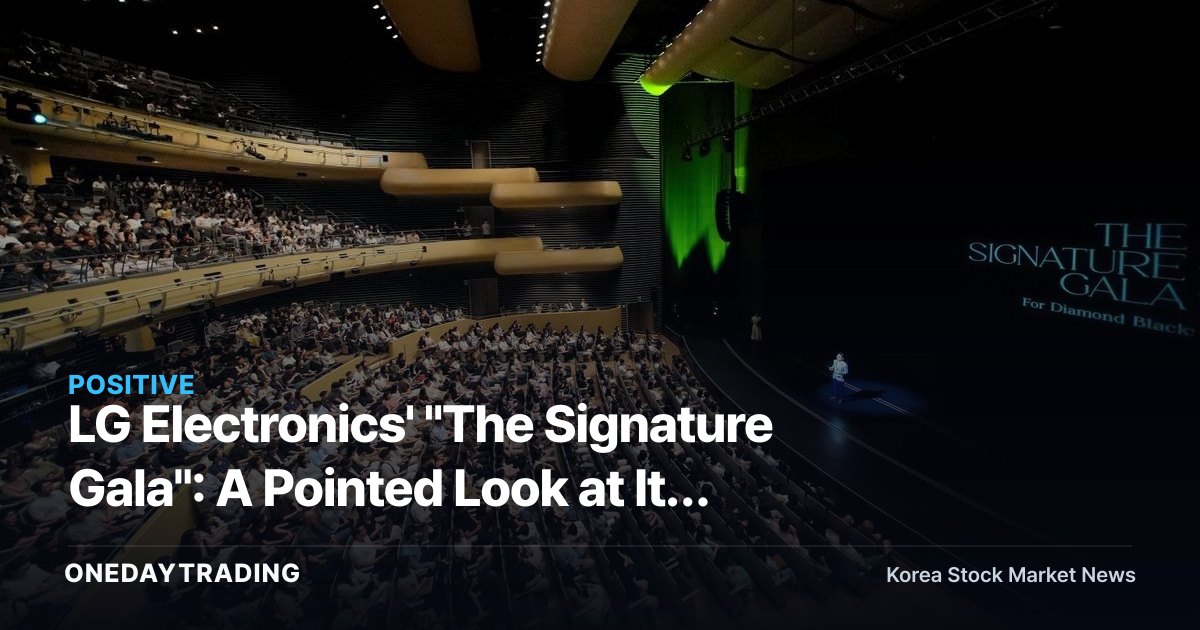
On the 12th and 13th, at LG Arts Center Seoul, LG Electronics offered an exclusive viewing of Germany's Ballett Dortmund — making its first Korean tour — to customers of its ultra-premium Diamond Black tier. Dubbed "The Signature Gala," the event goes beyond simple marketing; it is an extension of a lock-in strategy aimed at retaining loyal premium-appliance customers. The intent is clear: to defend its high-margin product lineup through brand experience rather than price competition.
Why It Matters Now
In the global home-appliance market, pressure on average selling prices is mounting amid aggressive low-price offensives from Chinese players and slowing demand. In this environment, a manufacturer's profitability hinges less on mass-market entry products and more on the weight and loyalty of its ultra-premium lines. LG Electronics' separate management of top-tier customers such as those in its Signature and Diamond Black grades is a textbook premiumization strategy — one designed to lift average spend per customer and repurchase rates to defend its operating profit margin.
In particular, LG Electronics is reshaping its business model toward raising customer lifetime value, alongside a shift to subscription and service-based offerings in its appliance business. Moving away from one-off sales to longer-term customer relationships can secure stable cash flows that hold up even through economic swings. Cultural marketing serves as the emotional glue of these relationships.
That said, the event itself is not one that directly boosts near-term earnings. For investors, it is reasonable to read it as one facet of a medium- to long-term trend toward stronger brand equity and an improved premium mix.
Frequently Asked Questions
- Will this event be reflected in earnings right away — No. It is a marketing activity aimed at managing loyal customers and enhancing brand value, and its effects will show gradually through repurchases and an improved premium mix.
- Why manage only ultra-premium customers separately — Top-tier customers have high spend per head and generate strong repurchase and referral effects, contributing significantly to profits.
- Can premiumization work when the appliance market is tough — Entry-level products face intense price competition and thin margins, whereas the ultra-premium segment sees lower competitive intensity and thicker margins, making it advantageous for defending profitability.
- Are competitors using a similar strategy — Samsung Electronics, with offerings like BESPOKE, is also strengthening premiumization and tailored experiences, so premium competition is intensifying.
Impact on Related Stocks & Sectors
- LG Electronics — Direct beneficiary; strengthening of ultra-premium lines is expected to help defend the appliance division's operating profit margin.
- Samsung Electronics — Intensifying premium-appliance competition with offerings like BESPOKE, joining the premiumization trend.
- Home & living appliance sector — A case study in the structural shift away from low-price competition and toward customer lock-in.
- LG Display — Indirectly linked to demand for premium TVs and displays.
- Subscription & service-model businesses — A segment set to benefit from the broader expansion of customer lifetime value.
Points to Watch When Investing
- This event is a marketing activity and is unlikely to serve as a direct catalyst for quarterly earnings or the share price.
- The appliance market is heavily swayed by global consumer conditions, exchange rates, and logistics costs, so macro variables must be considered alongside it.
- Aggressive low-price offensives from Chinese players and intensifying competition within the premium market could pressure margins.
- LG Electronics' earnings increasingly reflect a growing weight from non-appliance segments such as automotive components and B2B, so trends should be assessed comprehensively by division.
Overall Outlook
On the optimistic side, managing ultra-premium loyal customers can raise average selling prices and repurchase rates, providing a foundation to structurally lift the appliance division's profitability. Lock-in based on brand experience offers a stable revenue source set apart from price competition. On the risk side, however, slowing global consumption and intensifying competition could dampen even premium demand, and this event is ultimately only part of a long-term brand strategy — far removed from any near-term momentum. In the end, investment decisions are best weighted not toward marketing events but toward the premium mix and operating profit margin trends confirmed each quarter.
This article is content automatically summarized and analyzed based on the original news. View original (Maeil Business Newspaper, Corporate)