Donald Trump’s Iran Choice Raises the Risk Around Physical Trade
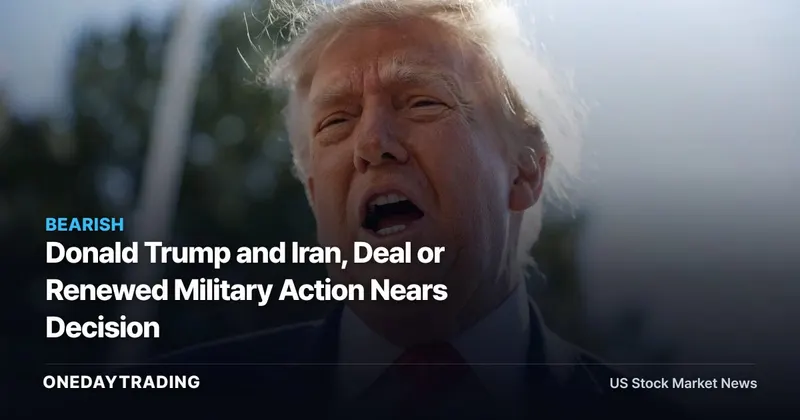
U.S. President Donald Trump said on Sunday that he was deciding between a deal with Iran and renewed military action, leaving investors with a binary policy risk around energy, shipping and transportation. The immediate market issue is not rhetoric alone: overall trade flows through the Strait of Hormuz remain severely curtailed while Washington and Tehran each claim control of the route.
CNBC reported that the last confirmed U.S. strikes on Iran occurred on Sept. 1. Trump previously said strikes would not resume until after the Nov. 3 U.S. midterm elections, making that political milestone an explicit checkpoint without establishing when or whether another attack will occur.
The Strait of Hormuz Is the Central Transmission Channel
The Strait of Hormuz is the contested waterway through which the conflict is constraining trade flows. Trump repeated his claim that the U.S. controls the strait and said crude oil flows had returned to pre-war levels. Tehran has also repeatedly claimed control, while the confirmed condition is that overall trade through the route remains severely curtailed.
Those statements create an important distinction for investors. A claim about crude oil flows does not establish that the broader trade route has normalized. The physical evidence in the fact set points to continued disruption: a Singapore-flagged container ship sank in the strait earlier this month after an unidentified projectile struck it and the vessel caught fire.
The projectile’s origin is unknown, so the incident cannot be assigned to any party. Its relevance lies in the operating environment. As long as ships are exposed to unidentified attacks and overall traffic remains constrained, energy, shipping and transport analysis must separate political declarations of control from observable passage through the waterway.
Qatar Opens a Diplomatic Path as Tehran Prepares for Attack
Mediators from Qatar visited Tehran on Sunday, according to Reuters. Qatar has played a key role in attempts to negotiate an agreement between Washington and Tehran, giving the diplomatic branch of Trump’s decision a confirmed channel even though neither a date nor potential terms for an agreement are known.
The military branch remains active at the same time. Tehran says it is preparing a response to any U.S. attack, while Iran Revolutionary Guard navy chief Ali Ozmaei said earlier this month that Tehran was “counting the moments” until it could sink American warships.
Trump described the choice in his Fox News interview as whether to “make a deal” or “finish it off,” adding that it was becoming “decision time.” The language sharpens the stakes, though it does not settle the outcome. Investors therefore cannot treat the Qatari visit as evidence that an agreement has been reached, or the military rhetoric as confirmation that an attack has been ordered.
Pickaxe Mountain Expands the Potential Target Set
Trump identified Pickaxe Mountain as a potential U.S. target and linked the site to Iran’s nuclear program. He also asserted that the other three Iran nuclear sites were obliterated. Both statements came from Trump; whether Pickaxe Mountain will be attacked remains unknown.
The distinction between a named potential target and an authorized operation matters. A target reference can raise perceived escalation risk, but the fact sheet provides no decision, timing or operational outcome. Tehran’s stated preparation for a military response means any assessment must account for a possible reaction without assuming its form or success.
This is why the investment thesis remains conditional. A deal could reduce the immediate decision risk surrounding Washington and Tehran. Renewed military action could intensify uncertainty around the strait and regional sites. Neither pathway can be presented as the base case from the available evidence.
Saudi Arabia Faces Security and Event Disruption
Attacks by Iran-backed Houthi militants on Saudi Arabia continued over the weekend. Missiles and drones targeted sites across the country, including Riyadh airport and an administrative building owned by Saudi Aramco, connecting the regional confrontation to both transport infrastructure and an energy company’s property.
Senior officials from Saudi Arabia, Turkey and Pakistan are meeting Iran’s leadership in Tehran on Monday. The three countries signed the Makkah Joint Defence Agreement in August, committing to closer defense cooperation and stipulating that an armed attack against one member would be regarded as an attack against all.
Saudi Arabia also postponed its Future Investment Initiative conference last week until 2027. That decision is a concrete sign that security concerns have already affected a scheduled business event, even though the fact sheet does not quantify any resulting commercial or financial loss.
Energy, Shipping and Transport Read-Through
- Energy: Trump said crude oil flows had returned to pre-war levels, while broader trade through the Strait of Hormuz remains severely curtailed. Investors should treat those as different measures rather than evidence of full normalization.
- Shipping: The container-ship sinking earlier this month confirms a physical hazard in the route. Responsibility for the projectile is unknown, preventing attribution or a conclusion about which party may shape the next incident.
- Transportation: Riyadh airport was among the Saudi Arabian sites targeted by Houthi missiles and drones. The evidence establishes an attack on transport infrastructure, not the duration or financial scale of any disruption.
- Saudi Aramco: An administrative building belonging to the company was targeted. The supplied facts do not establish damage, operating consequences or a measurable effect on production.
Deal Scenario Versus Renewed U.S. Action
Deal scenario: Qatar’s mediation and the Monday meeting in Tehran provide confirmed diplomatic contact around the conflict. An agreement between Washington and Tehran could narrow the immediate policy uncertainty, although no terms, timetable or evidence of completion have been supplied.
Military scenario: Renewed U.S. action would meet a Tehran government that says it is preparing a response. Pickaxe Mountain has been named only as a potential target, and the next effects on the Strait of Hormuz, Saudi Arabia or regional trade cannot be known from the available facts.
The bearish assessment reflects the current combination of severely curtailed trade, continuing Houthi attacks and unresolved military decisions. Its counterweight is active mediation. A verified agreement or sustained restoration of overall trade flows would weaken that negative reading; further attacks or confirmed U.S. action would reinforce it.
Investor Checkpoints Around Trump, Iran and the Strait
- Trump’s decision: Look for confirmation of whether U.S. President Donald Trump chooses negotiations or renewed military action, rather than treating either branch as settled.
- Diplomatic evidence: Monitor whether Qatar’s mediation or Monday’s talks involving Saudi Arabia, Turkey and Pakistan produce stated terms between Washington and Tehran.
- Physical trade: Track whether overall Strait of Hormuz flows recover, because Trump’s claim about crude oil does not by itself resolve the confirmed constraint on wider trade.
- Regional attacks: Watch for verified changes in Houthi activity against Saudi Arabia and for any confirmed decision concerning Pickaxe Mountain.
📊 Analysis
Signal Bearish
Why Severely curtailed Strait of Hormuz trade flows and unresolved military risk create a negative backdrop for energy, shipping and transport activity.
This article was independently written by OneDayTrading from public reporting. Read the original (CNBC)