Key Takeaways
Iran sanctions matter for U.S. energy stocks because the CNBC-reported plan shifts the Iran risk premium toward economic pressure and away from immediate military escalation, but the source gave no oil-volume figure, export target or implementation date. For investors in oil majors, refiners, tankers and defense stocks, the tradable variable is not the headline sanction threat; the variable is whether the measures change barrels, shipping routes or insurance costs.
CNBC reported that U.S. Treasury Secretary Scott Bessent said on Thursday that proposed economic measures would likely reduce the need for major U.S. military operations, while Iran criticized what it called extraterritorial sovereignty. That framing is market-relevant because sanctions can move equity earnings through commodity prices, transport costs and geopolitical-risk premiums before any physical disruption appears in company guidance.
What Happened
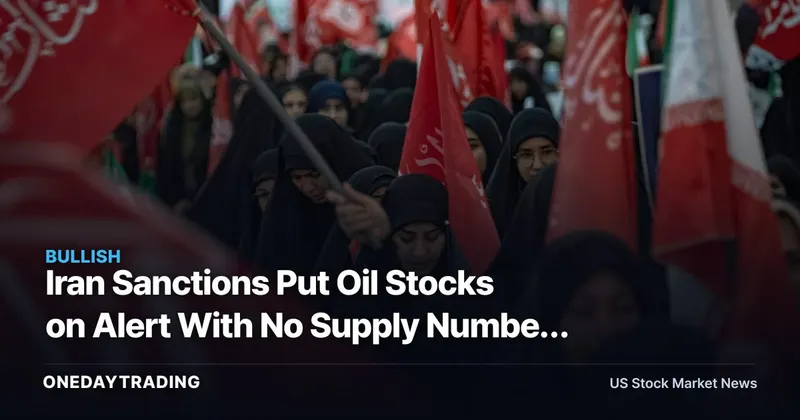
CNBC reported that Iran criticized tough new U.S. sanctions ahead of their expected rollout, using the phrase extraterritorial sovereignty to object to Washington applying economic pressure beyond U.S. borders. CNBC also reported that U.S. Treasury Secretary Scott Bessent told CNBC on Thursday that the proposed economic measures would likely negate the need for major U.S. military operations.
Sanctions are government restrictions on trade, finance or access to markets, and extraterritorial sanctions are measures that pressure non-U.S. parties by threatening their access to the U.S. financial system or U.S.-linked commerce. For markets, that legal channel matters because it can affect energy flows without a formal blockade or a direct military event.
The CNBC item did not provide a dollar amount, export-volume target, list of companies, crude-price move or formal policy date. That absence is not a footnote; it is the difference between a geopolitical headline and an earnings model input.
Background & Context
Iran sanctions usually enter U.S. equity screens through oil, shipping, insurance, defense and inflation expectations. A sanctions package that restrains supply or complicates transport can support crude-linked revenue for Exxon Mobil and Chevron, while the same mechanism can pressure fuel users and refiners if feedstock costs rise faster than product margins.
The Bessent comment changes the first read-through. If investors treat economic pressure as a substitute for major U.S. military operations, defense-risk premiums can cool while energy-risk premiums stay conditional on enforcement details.
Market & Stock Impact
- XOM: Exxon Mobil benefits if Iran sanctions lift crude benchmarks, because upstream revenue is directly tied to realized oil prices, but CNBC supplied no quantified supply reduction.
- CVX: Chevron has the same crude-price leverage as a global integrated producer, with the risk that sanctions rhetoric fades before spot prices or guidance move.
- VLO: Valero is more exposed to refining spread mechanics; higher crude costs hurt if gasoline and diesel cracks do not widen enough to absorb feedstock inflation.
- STNG: Scorpio Tankers can benefit if sanctions alter shipping distances or compliance costs, but the source did not report route changes or tanker-rate data.
- LMT: Lockheed Martin is a secondary read-through because Bessent framed economic measures as a way to reduce major military operations, which tempers rather than strengthens the defense catalyst.
Investor Checkpoints
- Watch the final U.S. sanctions text for named sectors, enforcement dates and penalties on non-U.S. counterparties.
- Track WTI crude and Brent crude after the policy details, because energy equities will follow realized barrels more than diplomatic language.
- Check next earnings calls from Exxon Mobil, Chevron and Valero for management comments on Middle East risk, feedstock costs and refining margins.
- Monitor tanker-rate commentary and insurance-cost references if sanctions enforcement reaches shipping or financing channels.
Outlook
The bullish case for U.S. oil producers is simple: Iran sanctions that reduce available barrels or raise compliance costs can lift crude-linked cash flow before company-specific news arrives. The counter-case is equally important: if the measures function mainly as diplomatic leverage and Bessent's economic-pressure thesis lowers military-risk pricing, energy stocks can lose the headline premium without ever gaining a volume-driven earnings catalyst.
FAQ
Why do Iran sanctions affect oil stocks?
Iran sanctions affect oil stocks because sanctions can restrict energy trade, financing or shipping even when no military action occurs. CNBC reported no export-volume target, so Exxon Mobil and Chevron investors should treat the impact as conditional until enforcement details are published.
What did Scott Bessent say about Iran sanctions?
CNBC reported that U.S. Treasury Secretary Scott Bessent said on Thursday that proposed economic measures would likely reduce the need for major U.S. military operations. That statement matters because markets price military escalation and economic enforcement through different sectors.
Which U.S. stocks are most exposed to Iran sanctions?
Exxon Mobil, Chevron, Valero, Scorpio Tankers and Lockheed Martin are exposed through crude prices, refining margins, shipping costs and defense-risk assumptions. CNBC did not name those companies, so the equity impact depends on how the sanctions text affects oil flows and security expectations.
📊 Analysis
Signal Bullish
Why The sanctions headline is a conditional positive catalyst for crude-linked U.S. energy producers, though the source lacks the enforcement and volume details needed for a stronger call.
Tickers$XOM$CVX$VLO$STNG$LMT
This article was independently written by OneDayTrading from public reporting. Read the original (CNBC)