Key Takeaways
Trump's plan to lower tariffs on 300,000 metric tons of imported beef would shift pricing pressure from food buyers toward domestic cattle producers, making rancher margins, grocery costs and Republican trade unity the central investor questions. The proposal matters less as a single tariff adjustment than as a test of whether import relief can lower prices without damaging protected U.S. supply.
The tape cannot price the full effect because CNBC's report provides no tariff rate, implementation date or eligible suppliers. Those missing terms determine how quickly cheaper imports reach buyers and how severely domestic producers must respond.
What Happened
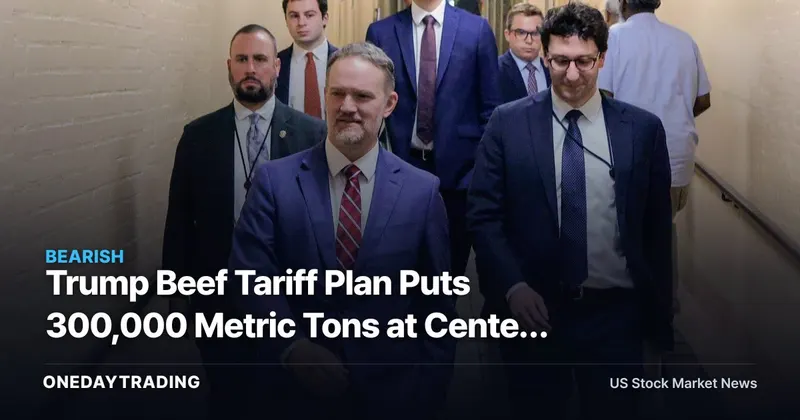
U.S. Trade Representative Jamieson Greer met House Republicans amid disputes over Trump's trade agenda, according to CNBC. The political pressure intensified after Trump's plan to reduce tariffs on 300,000 metric tons of imported beef triggered an uproar among cattle ranchers.
A tariff is a tax on imported goods; lowering it reduces the border cost paid by importers and can make foreign beef more competitive. The 300,000-metric-ton volume therefore creates a direct transmission channel from trade policy to wholesale beef pricing, domestic cattle demand and food-sector input costs.
Background & Context
The conflict exposes two competing policy objectives. Lower import barriers can reduce acquisition costs for beef buyers, while greater foreign competition can weaken the price received by U.S. ranchers.
The physical supply chain sets the timing. Tariff relief first changes import economics, then procurement decisions, and only later retail or restaurant pricing; lower border costs do not guarantee an equal reduction on consumer receipts.
Market & Stock Impact
- U.S. cattle producers: Additional lower-tariff supply would increase competition for domestic beef, placing cattle prices and rancher margins at risk if demand does not absorb the volume.
- Meat processors: Broader sourcing could reduce procurement pressure, but the benefit depends on eligible cuts, supplier access and whether savings survive processing and logistics costs.
- Grocery retailers: Lower wholesale beef costs would create room for promotions or margin retention, although competitive pricing could pass savings to shoppers.
- Restaurants: Beef-heavy menus would gain cost relief if imported product fits purchasing specifications; contracts and product mix govern the earnings timing.
- Trade-exposed equities: Greer's talks with House Republicans highlight political resistance that raises the probability of revisions, delays or narrower tariff relief.
Investor Checkpoints
- Watch for the final tariff rate and the baseline rate being reduced.
- Identify the effective date, eligible countries and whether the 300,000 metric tons operate as a quota.
- Track whether rancher opposition changes Republican support or the proposal's scope.
- Compare subsequent wholesale beef prices with grocery and restaurant pricing to locate where the benefit accrues.
Outlook
The constructive case is a targeted increase in imported beef that lowers buyer costs without overwhelming domestic demand. The adverse case is a policy large enough to pressure ranchers but too diluted across processing, freight and retail competition to deliver visible consumer relief. The next tradable trigger is not another political meeting; it is publication of the tariff rate, effective date and quota mechanics.
FAQ
Why does Trump want to lower beef tariffs?
CNBC reported that Trump plans to lower tariffs on 300,000 metric tons of imported beef. Lower tariffs reduce import costs, creating a mechanism for greater competition and potentially lower wholesale prices.
Why are cattle ranchers opposing the beef tariff plan?
U.S. cattle ranchers objected because lower-tariff imported beef would compete with domestic supply. If the added 300,000 metric tons exceed incremental demand, domestic cattle pricing and producer margins face pressure.
What stocks benefit from lower beef tariffs?
CNBC's report named no publicly traded company, so assigning a specific beneficiary would overstate the evidence. Grocery, restaurant and meat-processing shares gain only if lower import costs reach their procurement accounts and are not fully passed to customers.
📊 Analysis
Signal Bearish
Why The proposed tariff reduction introduces additional import competition for U.S. cattle producers, while downstream cost benefits remain dependent on undisclosed policy terms.
This article was independently written by OneDayTrading from public reporting. Read the original (CNBC)