Summary
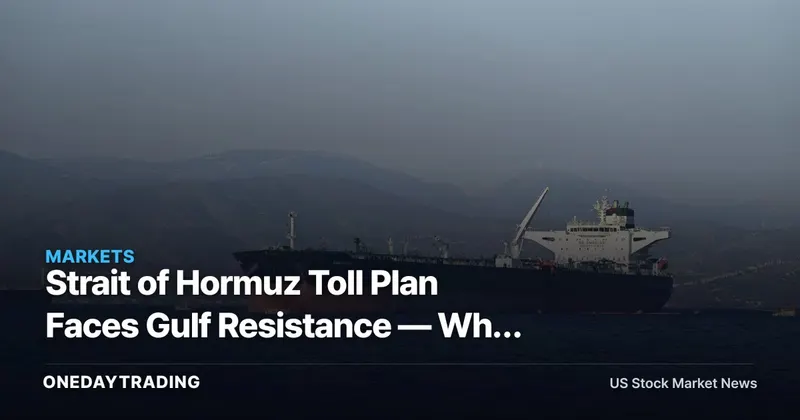
Strait of Hormuz toll-plan risk matters for Exxon Mobil, Chevron, oil shipping and refiners because CNBC reported that Gulf nations are unlikely to agree to or follow a fee system for safe passage through the waterway. The investor read-through is not lower geopolitical risk; the cleaner read is that a formal toll channel looks difficult to convert into a durable cash cost.
Strait of Hormuz safe passage refers to the movement of commercial energy and cargo vessels through the Gulf waterway, while a toll plan would attempt to attach a fee to that passage rather than leave the risk embedded in freight, insurance and crude prices.
The Full Story
CNBC's Brian Sullivan reported, based on conversations cited in the source item, that Gulf nations are unlikely to agree to or adhere to a safe-passage fee or toll for the Strait of Hormuz. That phrasing matters: reluctance to agree is a political constraint, while reluctance to adhere is an enforcement constraint.
For energy investors, the difference is material. A toll would be a visible line item that markets could model through tanker rates, delivered crude costs and refining margins; noncompliance leaves the risk in a less measurable bucket, where insurance premia, routing assumptions and headline shocks can move faster than quarterly guidance.
The tape generally prices Hormuz risk through crude, energy equities and shipping volatility, not through a known fee schedule. If the toll mechanism cannot secure Gulf alignment, oil majors such as Exxon Mobil and Chevron avoid one potential policy cost, but refiners and transport names still face the harder variable: whether physical passage stays reliable.
Structural Background
The Strait of Hormuz is an energy-market chokepoint in investor psychology because safe passage influences perceived supply security. CNBC's report does not say a disruption occurred, does not cite a toll amount and does not name any Gulf country agreeing to the proposal.
That absence limits the trade signal. Without a stated fee, date, sponsor or enforcement mechanism in the source reporting, investors should treat the story as a constraint on policy feasibility rather than as a quantified earnings event.
Stock & Sector Ripple
- XOM: Exxon Mobil is exposed through global oil-price sensitivity; a failed toll plan removes one possible cost narrative, but the stock still trades more on crude direction and upstream margins.
- CVX: Chevron would benefit if investors discount a formal passage fee, yet Chevron remains exposed to any future shift in Gulf transit risk that lifts energy-price volatility.
- VLO: Valero's refining margin risk sits in delivered crude costs; no toll amount means no immediate model change, but freight and insurance channels still matter.
- FRO: Frontline's tanker-rate setup depends on shipping risk and vessel availability; a hard-to-enforce toll is less important than whether cargo owners perceive transit as safe.
- Energy sector: Oil and gas equities avoid a discrete fee overhang, but the sector keeps the geopolitical-risk premium that attaches to any Hormuz headline.
Bull vs Bear Scenarios
The bull case is narrow but real: if Gulf resistance blocks a toll framework, energy producers and shippers avoid a new formalized transit charge that could have complicated costs and contracts. The bear case is that a rejected toll plan does not remove the underlying security issue; if safe-passage uncertainty rises, crude volatility can still pressure refiners and lift risk premia across shipping.
Investor Action Points
- Track whether CNBC or official Gulf statements identify any named country supporting or rejecting the toll plan.
- Watch crude prices and tanker equities together; divergence would show whether investors see the issue as supply risk or shipping-risk noise.
- Check next earnings commentary from Exxon Mobil, Chevron, Valero and tanker operators for references to freight, insurance or Gulf transit costs.
- Treat any future toll amount, implementation date or enforcement sponsor as the threshold that turns this from a headline risk into a model input.
FAQ
Why would a Strait of Hormuz toll plan matter for oil stocks?
A Strait of Hormuz toll plan would matter for oil stocks because a safe-passage fee could become a direct cost in crude transport and refining economics. CNBC's source item reported no toll amount, so Exxon Mobil, Chevron and refiners face no quantified earnings change from the report alone.
Did CNBC report that Gulf nations agreed to a Hormuz safe-passage fee?
CNBC reported the opposite: Brian Sullivan said Gulf nations are unlikely to agree to or adhere to a fee or toll for safe passage through the Strait of Hormuz. That makes political buy-in and enforcement the central weaknesses in the plan.
What should investors watch after the Strait of Hormuz toll report?
Investors should watch for named Gulf-country positions, a stated toll amount, an implementation date and any enforcement framework after CNBC's report. If those details appear, the issue can move from geopolitical color into freight costs, crude spreads and refining-margin assumptions.
📊 Analysis
Signal Neutral
Why CNBC's report reduces the likelihood of a formal toll cost but does not remove Strait of Hormuz transit risk or provide a quantified earnings impact.
This article was independently written by OneDayTrading from public reporting. Read the original (CNBC)