August 2026 CPI Holds Above the Federal Reserve’s Target
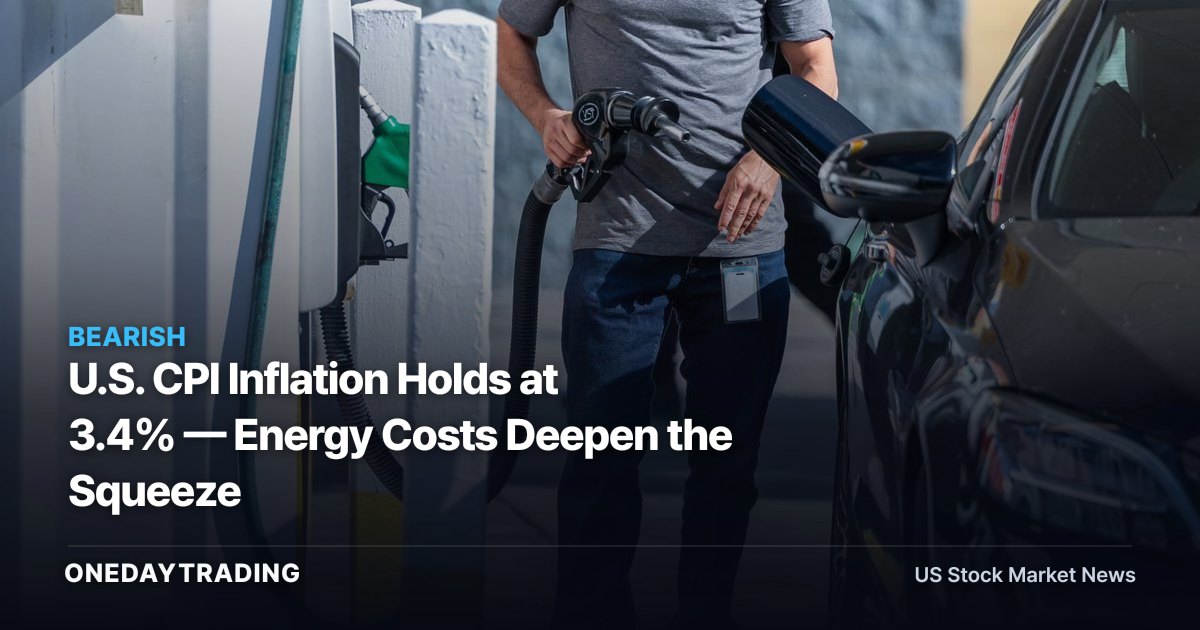
The consumer price index is a measure of inflation, and the August 2026 reading showed U.S. consumer prices rising 3.4% from a year earlier, according to CNBC. That annual rate was unchanged from July and remained above the Federal Reserve’s 2% annual target.
Inflation had exceeded the Federal Reserve’s target for five years through August 2026, CNBC reported. CNBC’s account therefore supports a more complicated macro interpretation than the unchanged annual rate alone suggests: the headline stopped accelerating, but it did not move closer to the target during August.
Thomas Ryan of Capital Economics said there was “a lot riding” on the CPI report for the Federal Reserve. The future course of interest rates is not confirmed, however, so the inflation release cannot establish a specific policy outcome.
Gasoline Dominates the Monthly Inflation Signal
Gasoline provides the clearest measured source of August pressure. According to CNBC, gasoline prices rose nearly 4% during August 2026 and more than 27% compared with August 2025. Gasoline accounted for more than one-third of the CPI’s monthly increase, although the exact monthly change in the overall index was not provided.
AAA reported gasoline at about $4.30 per gallon on Friday, compared with $3.19 per gallon a year earlier, according to CNBC. Diesel reached a record $6 per gallon on Friday. CNBC’s figures support the interpretation that the inflation burden extended beyond a stable annual headline, because consumers faced materially higher prices for major fuels.
Global oil prices exceeded $100 per barrel during the week of CNBC’s report, the first time they had crossed that level since mid-May. Joe Seydl of J.P. Morgan Private Bank described the conflict as a major energy shock to the global economy, according to CNBC.
Airfare Extends the Consumer-Cost Pressure
Airfare rose nearly 3% during August 2026 and more than 23% from August 2025, CNBC reported. Those figures place travel alongside gasoline as a category in which the monthly and annual comparisons both moved higher.
For retail investors, CNBC’s data support a cautious interpretation of travel-related household spending, but they do not establish any individual airline’s revenue, costs or profitability. The fact sheet supplies the consumer-price movement, not company-level financial outcomes, so a stock-specific conclusion would go beyond the available evidence.
Apple and Microsoft Bring Inflation Into Consumer Hardware
Energy was not the only area associated with higher prices in CNBC’s reporting. Apple announced higher MacBook and iPad prices in June and cited surging memory and storage costs. Microsoft said shortly afterward that it was raising Xbox console prices for a similar reason.
CNBC’s reporting supports a bearish near-term interpretation for consumer-hardware affordability: both companies passed higher cited component costs into product prices. It does not establish how customers responded, whether unit demand changed or whether either company’s financial performance benefited or suffered.
That distinction matters for Apple and Microsoft investors. A confirmed price increase demonstrates a change in what consumers pay, but CNBC’s facts do not show the associated effect on sales, market position or margins. The next useful company checkpoints are therefore reported sales, customer response and management guidance, whenever those disclosures occur.
Winners & Losers
- Apple: CNBC reported that Apple raised MacBook and iPad prices in June because of surging memory and storage costs. The confirmed development is higher pricing; its effect on Apple’s demand and financial results is not supplied.
- Microsoft: CNBC reported that Microsoft increased Xbox console prices for a reason similar to Apple’s. The higher consumer price is confirmed, while the resulting sales or profit impact is not.
- Travel consumers: Airfare rose nearly 3% during August 2026 and more than 23% from August 2025, according to CNBC, making travel a directly measured source of higher household costs.
- Fuel consumers: Gasoline increased nearly 4% during August 2026 and more than 27% from August 2025, while diesel reached a record $6 per gallon on Friday, CNBC reported.
Risk Check
- Oil-price checkpoint: CNBC reported global oil prices above $100 per barrel during the week. Whether that level persists is not established.
- Inflation composition: Gasoline supplied more than one-third of August’s monthly CPI increase, according to CNBC. The fact sheet does not quantify the separate overall contributions from energy, artificial intelligence or tariffs.
- Policy uncertainty: The Federal Reserve’s target is 2% annually, but CNBC did not confirm the future path of interest rates.
- Policy countercondition: The Supreme Court struck down a central piece of the Trump administration’s tariff policy in February, according to CNBC. The fact sheet does not quantify the resulting effect on August inflation.
Bottom Line
The unchanged 3.4% annual CPI rate in August 2026 offers a narrow stabilizing signal, but CNBC’s underlying figures support a bearish tilt: gasoline, diesel and airfare remained sources of consumer-cost pressure, while Apple and Microsoft raised hardware prices. The countercase is that the annual CPI rate did not accelerate from July; the live risks are the duration of the energy disruption, the next inflation reading, and subsequent Apple and Microsoft disclosures showing whether higher prices changed demand or financial performance.
FAQ
What was the exact monthly CPI increase in August 2026?
CNBC’s fact sheet does not provide the exact monthly change in the overall consumer price index. It states only that gasoline contributed more than one-third of the index’s monthly increase.
Will the Federal Reserve change interest rates after the August CPI report?
The future path of Federal Reserve interest rates is not confirmed in CNBC’s fact sheet. The confirmed comparison is that August 2026 annual CPI inflation was 3.4%, versus the Federal Reserve’s 2% annual target.
How long will the Iran war keep affecting energy prices?
CNBC reported that the war passed the six-month mark at the end of August 2026. The fact sheet does not specify how long the conflict or its associated energy disruptions will continue.
📊 Analysis
Signal Bearish
Why CNBC's figures support a bearish reading because fuel and travel costs climbed while Apple and Microsoft raised consumer-hardware prices.
This article was independently written by OneDayTrading from public reporting. Read the original (CNBC)