Key Takeaways
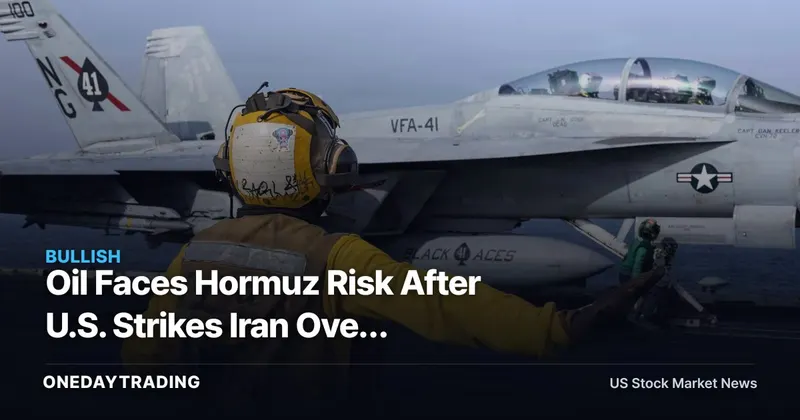
Oil, Exxon Mobil and Chevron are the direct investor read-through from CNBC's report that U.S. Central Command announced new U.S. strikes around the Strait of Hormuz after Iranian attacks on ships and U.S. military personnel. The trade is not about barrels reported lost; the supplied report gives no production, casualty or price figures, so the market mechanism is risk premium, insurance cost and route security.
The Strait of Hormuz is a critical maritime chokepoint where political violence can move energy, shipping and airline equities through expected supply disruption, freight risk and fuel costs. For investors, the first question is whether the attacks remain episodic or force a durable repricing of transport and energy security.
What Happened
CNBC reported that U.S. Central Command announced new strikes around the Strait of Hormuz following Iranian attacks on ships and U.S. military personnel. The supplied CNBC brief identifies the location, the U.S. military actor and the trigger, but it does not provide oil-price moves, damage estimates, casualty figures or company-specific exposure.
That absence matters. Exxon Mobil, Chevron and other U.S. oil producers benefit only if traders assign a higher probability to supply risk or stronger crude pricing; tanker owners, airlines and import-sensitive manufacturers suffer when the same security shock lifts insurance, fuel or operating uncertainty.
Background & Context
Hormuz risk is a capital-cycle story, not a press-release story. Energy equities respond when the physical market must price route security, while transportation equities respond when the same event threatens margins through fuel and logistics costs.
The supplied CNBC report centers on U.S.-Iran military escalation near shipping lanes, not on earnings, production guidance or sanctions. That makes the signal macro-sensitive and headline-driven until companies disclose operating effects in guidance or investors see the move confirmed in crude, freight and insurance markets.
Market & Stock Impact
- XOM: Exxon Mobil is the cleanest U.S.-listed integrated oil read-through because higher crude risk premium lifts upstream revenue leverage before downstream margins prove the benefit.
- CVX: Chevron shares can draw support from the same crude-risk channel, but the stock needs sustained oil pricing rather than one military headline to translate the event into earnings expectations.
- OXY: Occidental Petroleum has a more oil-sensitive equity profile, so a durable crude bid from Hormuz security risk would matter more than a brief geopolitical spike.
- DAL: Delta Air Lines faces the opposite channel because higher jet-fuel expectations pressure airline margins unless fares or hedging absorb the cost.
- FDX: FedEx is exposed through transport costs and global logistics reliability, where route disruption and fuel inflation can dilute operating leverage.
Investor Checkpoints
- Track the next U.S. Central Command update for whether the strikes end the exchange or signal repeated operations around the Strait of Hormuz.
- Watch crude oil prices after the CNBC-reported attacks because energy stocks need price confirmation to hold a geopolitical premium.
- Monitor airline and logistics guidance for fuel-cost commentary at the next earnings updates from Delta Air Lines and FedEx.
- Check whether insurers, shippers or carriers report higher route costs tied to the Strait of Hormuz after the Iranian attacks cited by CNBC.
Outlook
The bull case for Exxon Mobil, Chevron and Occidental Petroleum is straightforward: if Hormuz security risk keeps crude prices firm, upstream earnings expectations improve before production volumes change. The risk is just as clear: if U.S. strikes deter further attacks and shipping normalizes, the geopolitical premium fades and the trade reverts to inventory, demand and OPEC-driven fundamentals.
For transportation stocks, the setup runs in reverse. If fuel and route costs rise after the CNBC-reported attacks, Delta Air Lines and FedEx absorb margin pressure; if the exchange stays contained, the stock impact should narrow to a short-lived risk adjustment rather than a new earnings trend.
FAQ
Why do U.S. strikes near the Strait of Hormuz matter for oil stocks?
U.S. strikes near the Strait of Hormuz matter for oil stocks because CNBC reported that the action followed Iranian attacks on ships and U.S. military personnel. Exxon Mobil, Chevron and Occidental Petroleum benefit when investors price a higher probability of crude supply disruption.
Which stocks are most exposed to Iran shipping attacks near Hormuz?
Exxon Mobil, Chevron and Occidental Petroleum are exposed on the positive side through oil-price risk premium. Delta Air Lines and FedEx are exposed on the negative side because higher fuel and logistics costs pressure transportation margins.
Is the Hormuz news bullish or bearish for the market?
The Hormuz news is mixed because energy producers can gain from higher crude-risk pricing while airlines and logistics companies face cost pressure. The broader market impact depends on whether the CNBC-reported attacks become a sustained shipping-security problem or a contained military exchange.
📊 Analysis
Signal Bullish
Why The event creates a positive crude-risk premium for U.S. energy producers, though the benefit depends on sustained oil-price confirmation.
Tickers$XOM$CVX$OXY$DAL$FDX
This article was independently written by OneDayTrading from public reporting. Read the original (CNBC)