What the Strait of Hormuz Strike Changes for Oil
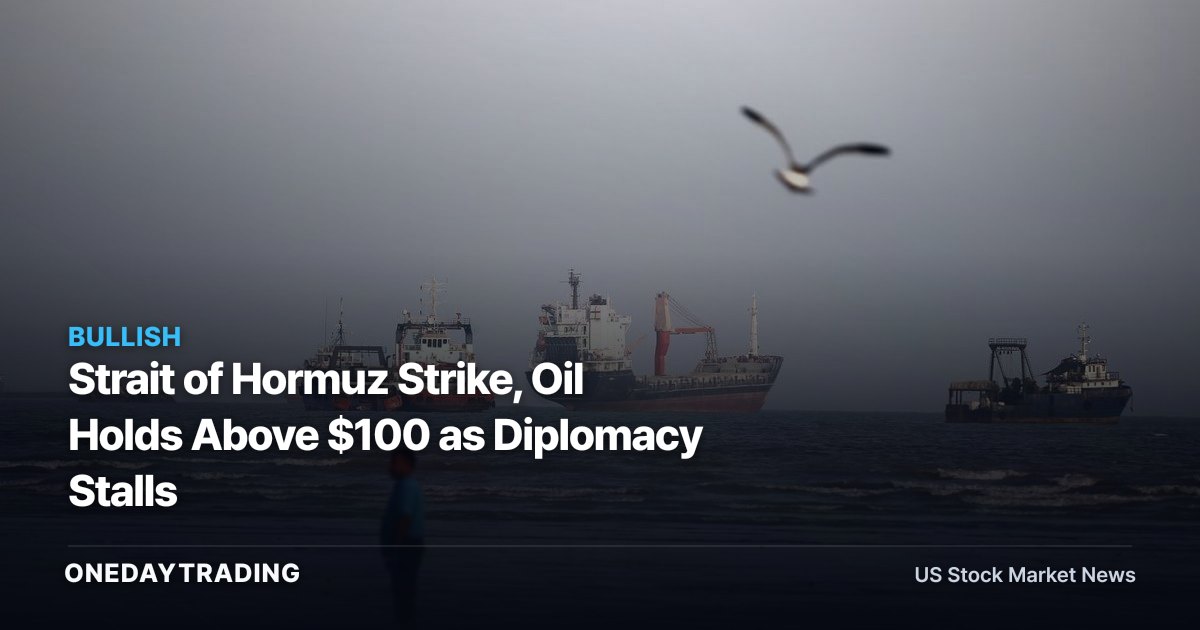
Strait of Hormuz oil risk now rests on two competing signals: another vessel was hit as transit remained constrained, yet regional officials were expected to pursue a shipping arrangement through the same waterway. For energy investors, the strike matters because it adds another physical incident to a corridor where oil and other cargo shipments had already slowed to a trickle after the U.S. and Israel began their war on Iran on Feb. 28.
The Strait of Hormuz is the waterway between Iran and Oman through which the affected vessel was transiting and where the proposed Iran-Oman shipping route would operate. The investment mechanism is straightforward: restricted passage can constrain the movement of cargo, while credible, functioning access can reduce that constraint. The facts supplied do not establish whether the planned route would restore meaningful shipment volumes, so treating the expected agreement as equivalent to reopened traffic would be premature.
The latest incident strengthens the disruption case but does not quantify it. The vessel’s name, flag, cargo, precise location, damage and crew details were not provided, and the attacker remains unidentified. That missing information prevents a defensible estimate of lost cargo or capacity; the more useful signal is whether subsequent vessels receive permission and complete transit.
Oil Prices and Naval Activity by the Numbers
Friday’s retreat did not erase the elevated absolute price levels. According to CNBC, Brent crude oil futures settled 2.8% lower at $104.61 per barrel, and U.S. West Texas Intermediate settled 2.4% lower at $100.05 per barrel. Brent had peaked at around $108 per barrel Thursday, while WTI reached more than $104 per barrel that day.
The operational figures show why a single daily decline cannot resolve the supply-risk debate. U.S. Central Command said Wednesday that it had destroyed 10 Iranian tankers in the preceding week. CENTCOM then said Saturday that its forces had redirected 100 commercial vessels over the past 60 days after resuming a naval blockade against Iran, adding that “ZERO ships have passed through the blockade without U.S. forces allowing.”
Those numbers describe extensive intervention in vessel movement, but they do not reveal the cargoes, destinations or conditions governing each redirection. The tape therefore reflects a known restriction with an unknown path to normalization. Oil can remain sensitive to evidence of passage even when a session closes lower.
Shipping Access, Diplomacy and the Physical Bottleneck
The diplomatic channel offers no confirmed U.S.-Iran breakthrough. Ebrahim Azizi, head of the Iranian parliament’s national security committee, said, “No negotiations. Until Iran’s terms are met, talks are futile.” An Iranian official also said that no negotiations with the U.S. were taking place.
A separate regional track was expected to bring Iranian and Gulf officials to Muscat on Monday to sign an agreement establishing an Iran-Oman shipping route through the Strait of Hormuz. That is a plan, not evidence of completed passage. The next meaningful checkpoint is whether the agreement is signed and whether vessels actually use the route.
Iranian President Masoud Pezeshkian said Friday that Iran would not surrender and declared, “Iran has successfully stood against Israel and the U.S.” Donald Trump said Saturday that the war would likely end soon after November’s midterm elections and that oil would fall sharply afterward. Neither statement establishes a negotiated settlement or a timetable for restored shipping, leaving physical transit data more useful than political forecasts.
Winners & Losers
- Oil prices: Continued restrictions in the Strait could support Brent and WTI because shipments have slowed to a trickle and commercial vessels have been redirected. The counterweight is a functioning Iran-Oman route or other evidence that more cargo can pass.
- Commercial shipping: Vessel operators face an impaired transit environment. The reported strike caused a fire and required evacuation assistance, while CENTCOM’s 100 redirected commercial vessels over the past 60 days indicate that passage is not operating normally.
- Saudi Arabia’s bypass capacity: The East-West crude oil pipeline had provided an alternative to the Strait, but Saudi Arabia said it shut the facility after drone attacks from Iraq. Fires, damage and injuries make the bypass itself another operational checkpoint rather than an assured release valve.
- Oil consumers: A decline in crude would require easing disruption or another condition capable of lowering prices. Trump predicted such a fall after the war ends, but the supplied facts do not confirm either the timing of an end to the war or the resulting price outcome.
Risk Check
- Escalation risk: Another strike, tanker destruction or further restrictions on commercial traffic could reinforce the physical scarcity signal embedded in oil above $100 per barrel at Friday’s settlement.
- De-escalation risk: A signed Iran-Oman shipping agreement followed by successful vessel transit could weaken the disruption premium. Signing alone would not prove that shipment volumes have recovered.
- Alternative-route risk: Saudi Arabia relies on its East-West crude oil pipeline to bypass Hormuz, but drone attacks caused fires and damage before the kingdom shut it. The pipeline’s operating status is therefore a concrete next check.
- Information risk: The latest vessel’s cargo and damage remain undisclosed, while details of the blockade and redirected ships are limited. Price conclusions that assume a specific volume loss would exceed the available evidence.
Bottom Line
Oil above $100 per barrel at Friday’s settlement shows that the market was already carrying a substantial disruption signal before the latest vessel report could be translated into measurable cargo loss. The bullish case rests on continued restricted passage, repeated maritime incidents and pressure on Saudi Arabia’s bypass route; the opposing case requires observable movement toward restored capacity. The next decisive evidence is operational: completion and use of the proposed Iran-Oman route, actual vessel passage through Hormuz, the status of the East-West pipeline and any change in CENTCOM’s redirection activity.
FAQ
Was the attacker in the Strait of Hormuz identified?
No. UKMTO described the projectile as unknown, and the supplied information does not identify who launched it. Assigning responsibility would go beyond the confirmed facts.
What cargo was the struck vessel carrying?
The cargo was not disclosed. The vessel’s name and flag were also not provided, so the incident cannot be tied to a particular commodity shipment.
Were all crew members safely evacuated?
Local authorities helped evacuate crew members after the onboard fire. The number evacuated and their condition were not provided.
📊 Analysis
Signal Bullish
Why Persistent shipping disruption and attacks on both the Strait and Saudi Arabia’s bypass pipeline support a risk premium in oil, although renewed routing access could ease it.
This article was independently written by OneDayTrading from public reporting. Read the original (CNBC)