What Changes
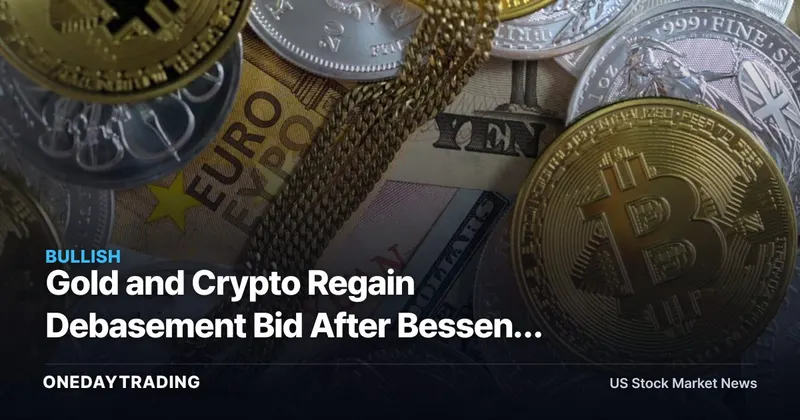
Gold and crypto move when the market questions the denominator. CNBC's report frames the latest move around U.S. government spending, the cost of that spending and a Bessent bond maneuver, which puts the fiscal channel ahead of the usual inflation-only explanation.
The mechanism matters for multiples. If investors demand more compensation to hold U.S. government debt, discount rates can pressure long-duration equities while scarce or non-sovereign assets attract incremental demand. That does not make every crypto stock a winner; it favors balance sheets and products most directly tied to trading volume, custody demand and gold inflows.
The cleaner read is asset allocation, not ideology. Gold benefits when reserve credibility is questioned, while Bitcoin and listed crypto infrastructure benefit when retail and institutional investors seek a liquid alternative to fiat exposure. The counterweight is that both trades can reverse quickly if bond yields stabilize and the dollar regains sponsorship.
By the Numbers
CNBC's source material does not provide a Bitcoin price, gold price, Treasury yield, deficit figure or bond-issuance amount. That absence is important: investors should treat the story as a positioning signal until market data confirms the size of the move.
The measurable checkpoints are straightforward. Track spot gold, Bitcoin, the 10-year Treasury yield and the U.S. dollar index together; a durable debasement trade usually needs hard assets rising while confidence in sovereign purchasing power weakens.
Winners & Losers
- SPDR Gold Shares GLD: GLD is the most direct U.S.-listed liquid proxy for gold demand when investors rotate toward hard assets.
- iShares Gold Trust IAU: IAU benefits from the same gold-allocation channel, especially when retail investors prefer lower-cost ETF exposure.
- iShares Bitcoin Trust IBIT: IBIT is tied to Bitcoin demand, so renewed crypto interest can translate into fund flows if the debasement narrative persists.
- Coinbase COIN: Coinbase gains from crypto trading activity and custody relevance, but fee sensitivity and regulatory risk can dilute the macro tailwind.
- Rate-sensitive growth equities: Long-duration software and speculative technology can lag if the fiscal concern pushes Treasury yields higher.
Risk Check
- No source-provided prices: CNBC's report names the trade but does not quantify the gold, crypto or bond-market move.
- Policy uncertainty: A Bessent bond maneuver can change Treasury supply expectations, but the market reaction depends on follow-through in yields and auction demand.
- Dollar reversal: A stronger U.S. dollar would challenge gold and crypto because both often compete with cash as a store of value.
- Crypto beta: Bitcoin-linked equities can overshoot the underlying asset because trading volume, sentiment and regulation add separate risks.
Bottom Line
The debasement trade is bullish for gold and crypto exposure if U.S. spending worries keep lifting term-premium anxiety, but the trade needs confirmation from yields, the dollar and fund flows. The next trigger is not a slogan; it is whether bond-market pricing validates CNBC's fiscal-stress frame.
FAQ
Why are gold and crypto rising on the debasement trade?
Gold and crypto draw demand in a debasement trade because investors seek assets outside direct fiat-money exposure when U.S. spending and debt-service concerns rise. CNBC reports that those concerns returned after a Bessent bond maneuver.
What is the debasement trade in markets?
The debasement trade is a market strategy that favors stores of value such as gold and cryptocurrency when investors worry that government finances can erode currency purchasing power. The strategy usually strengthens when fiscal credibility, bond supply or debt costs become central market concerns.
Which stocks and ETFs benefit from the debasement trade?
GLD and IAU benefit most directly when gold demand rises because both funds track gold exposure. IBIT and COIN benefit from crypto demand, although Coinbase stock also depends on trading activity, fee economics and regulatory conditions.
📊 Analysis
Signal Bullish
Why The CNBC report describes renewed investor demand for gold and crypto as U.S. spending and debt-cost concerns revive the debasement trade.
Tickers$GLD$IAU$IBIT$COIN
This article was independently written by OneDayTrading from public reporting. Read the original (CNBC)