Key Takeaways
The market read-through is not Iran alone; it is the policy premium investors may have to rebuild into oil, transport costs and risk assets. Trump’s announcement of economic warfare on Iran extends a pressure campaign in place since April under Operation Economic Fury, and the threat of tremendous consequences for Iran’s backers widens the circle of uncertainty.
What Happened
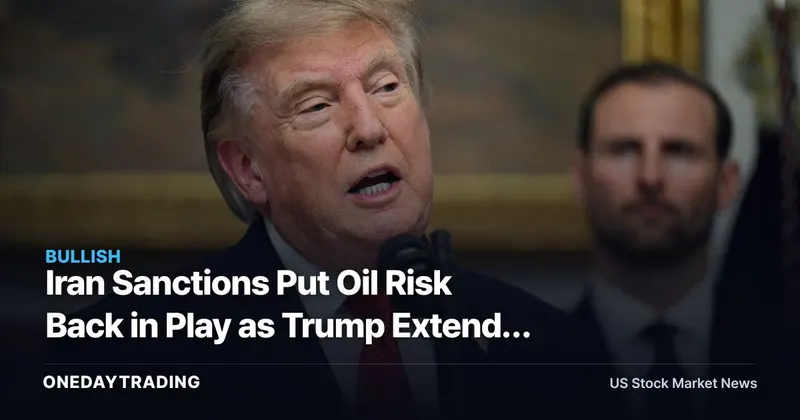
CNBC reported that Trump announced economic warfare on Iran and warned of severe consequences for those supporting it. The statement turns an existing campaign into a broader signal: enforcement risk may no longer sit only with Iran, but also with counterparties, financiers, traders and governments seen as enabling it.
The source gives no oil-price move, sanction list, shipment figure or company-specific exposure. That matters. Investors should treat this as a policy-risk headline first, not as proof of an immediate supply shock.
Background & Context
Operation Economic Fury has been running since April, so the fresh element is escalation language, not the start of pressure. The tape can price rhetoric quickly, but it usually needs implementation details before separating symbolic pressure from a constraint on trade flows.
For markets, the transmission chain is simple: tougher enforcement can raise uncertainty around crude availability, freight routing and insurance costs. Higher energy risk can support integrated oil producers while pressuring fuel-intensive sectors whose cost structures reprice faster than ticket prices.
Market & Stock Impact
- XOM: Exxon Mobil benefits if geopolitical risk lifts crude benchmarks, because upstream earnings are directly tied to realized oil prices. The risk is that no measurable supply disruption follows the announcement.
- CVX: Chevron has the same oil-price sensitivity, but investors will need evidence beyond April-era pressure rhetoric before assigning a durable premium.
- UAL: United Airlines is exposed on the cost side. If fuel prices rise, margins can compress unless fares and demand absorb the increase.
- DAL: Delta faces the same fuel channel, with the counterpoint that headline policy risk may fade if enforcement details do not change trade behavior.
- Energy sector: Oil equities may catch a risk-premium bid, while refiners, airlines and logistics names depend on whether crude and fuel spreads actually move.
Investor Checkpoints
- Watch for specific sanctions, enforcement actions or named backers tied to Operation Economic Fury.
- Track WTI crude and Brent reaction after the announcement rather than assuming a sustained move from the headline alone.
- For XOM and CVX, monitor next earnings commentary on realized prices and geopolitical risk premiums.
- For airlines, check fuel-cost guidance and fare resilience in the next reporting cycle.
Outlook
The bullish case for oil-linked equities is that Washington’s escalation forces markets to price a wider enforcement perimeter around Iran-related activity. The bear case for that trade is equally clear: without named targets, shipment data or a visible crude move, the announcement remains policy pressure that markets may fade. The next trigger is not another adjective from Washington; it is whether Operation Economic Fury produces concrete actions investors can map to barrels, costs and margins.
📊 Analysis
Signal Bullish
Why The announcement raises geopolitical and enforcement risk around Iran, which is a positive catalyst for oil-linked equities even though implementation details remain uncertain.
This article was independently written by OneDayTrading from public reporting. Read the original (CNBC)