At a Glance
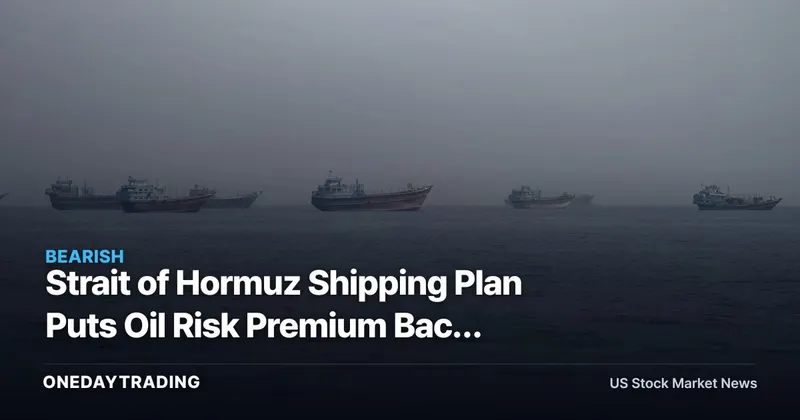
Strait of Hormuz shipping route talks between Iran and Oman on Tuesday matter for investors because the proposal targets the physical chokepoint behind oil-risk pricing, tanker routing and energy-sector volatility. Per CNBC, Iran and Oman discussed a jointly managed shipping route and a mine clearing mission through the Strait of Hormuz.
The Strait of Hormuz shipping proposal is a maritime-security plan in which Iran and Oman would manage a route through the waterway while also addressing mine clearance, a physical-risk issue for commercial shipping.
Why It Matters Now
The tape does not need a signed agreement to react; energy markets price probability before proof. A jointly managed Iran-Oman route through the Strait of Hormuz would point toward lower perceived disruption risk if the talks advance beyond Tuesday's discussion, which would pressure the geopolitical premium embedded in crude oil and shipping insurance.
For Exxon Mobil, Chevron and other U.S.-listed oil majors, the channel is indirect but real: lower chokepoint risk can weigh on crude benchmarks, while smoother transit can support volume reliability. The trade-off is that integrated producers benefit from operational continuity but can lose equity support when oil-risk premia fade.
For tanker operators and global shipping stocks, the mine clearing mission is the more concrete variable. A safer route can reduce operational uncertainty, but a jointly managed corridor can also introduce policy, compliance and enforcement questions that investors cannot model from CNBC's Tuesday report alone.
Key Debates
- Risk premium versus real supply: The Iran-Oman discussion affects perceived disruption risk before it changes any barrel of supply.
- Route design: A jointly managed Strait of Hormuz corridor matters only if commercial shippers trust the governance and security process.
- Mine clearing credibility: A mine clearing mission can lower physical-route risk, but execution details were not provided in CNBC's report.
- Equity impact: Oil majors may gain from transit stability while losing support from a lower crude-risk premium.
Related Stocks & Sectors
- XOM: Exxon Mobil is exposed through crude oil pricing, where lower Strait of Hormuz disruption risk can reduce geopolitical support for energy equities.
- CVX: Chevron tracks the same oil-risk channel, with investors weighing route stability against any decline in crude-risk premium.
- SHEL: Shell's global energy mix makes the Strait of Hormuz discussion relevant through commodity pricing and maritime logistics.
- BP: BP investors should separate supply-chain resilience from the possibility of softer oil-risk pricing.
- FRO: Frontline and tanker peers are tied to shipping-route risk, insurance assumptions and voyage economics.
What to Watch
- Whether Iran and Oman move from Tuesday's discussion to a formal route-management framework.
- Whether any mine clearing mission receives operational details, timing or international participation.
- Whether crude oil gives back risk premium after the CNBC-reported talks or treats the proposal as diplomatic noise.
- Whether tanker rates and insurance language reflect lower perceived Strait of Hormuz risk.
Overall Outlook
The investor read is modestly bearish for oil-risk premium, not bearish for the entire energy complex. If the Iran-Oman shipping route advances with credible mine clearing, crude volatility tied to the Strait of Hormuz should ease; if the plan stalls at Tuesday's discussion, energy and tanker stocks will keep pricing the chokepoint as an unresolved geopolitical risk.
FAQ
Why does the Strait of Hormuz shipping route matter for oil stocks?
The Strait of Hormuz shipping route matters for oil stocks because CNBC reported on Tuesday that Iran and Oman discussed a jointly managed route through a key maritime chokepoint. Exxon Mobil and Chevron can benefit from transit stability, but lower perceived disruption risk can reduce crude oil risk premium.
What is the Iran Oman mine clearing mission?
The Iran-Oman mine clearing mission is the security component discussed alongside the proposed jointly managed Strait of Hormuz shipping route, per CNBC's Tuesday report. Mine clearing matters because physical hazards in a shipping lane can influence insurance costs, tanker routing and energy-market risk pricing.
Which U.S. stocks are tied to Strait of Hormuz shipping risk?
U.S.-listed energy and shipping names tied to Strait of Hormuz shipping risk include Exxon Mobil, Chevron, Shell, BP and Frontline. The relevant investor metrics are crude oil risk premium, tanker rates, insurance assumptions and any formal details from Iran and Oman after Tuesday's discussion.
📊 Analysis
Signal Bearish
Why The proposal points toward lower Strait of Hormuz disruption risk, which can compress the geopolitical premium supporting oil-linked equities if talks progress.
Tickers$XOM$CVX$SHEL$BP$FRO
This article was independently written by OneDayTrading from public reporting. Read the original (CNBC)