What Changes
A Hormuz naval-mine incident is a physical threat to commercial shipping in which explosive devices can force carriers to reassess routes, crew safety and insurance coverage. Two tanker incidents do not establish a sustained closure, but they raise the cost of treating regional transit as routine.
The transmission channel runs from vessel risk to freight and insurance, then to delivered crude costs. If shipowners demand higher compensation or insurers restrict coverage, oil can become more expensive to move even without a confirmed loss of production.
For investors, that distinction matters. Higher crude prices can expand upstream revenue for U.S. producers, while higher transport and fuel costs pressure refiners, airlines and other energy-intensive businesses unless those costs reach customers quickly.
By the Numbers
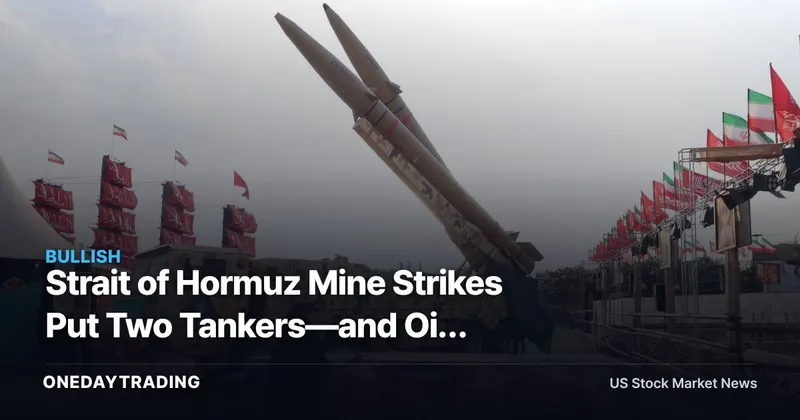
Iran said two tankers hit naval mines near Hormuz following the latest U.S. strikes, according to CNBC’s Tuesday report. CNBC also reported that U.S. forces struck multiple Islamic Revolutionary Guard Corps sites across Iran during that wave.
The source provided no oil-price move, vessel names, cargo losses, closure duration or repair estimate. Those omissions prevent investors from converting the event into a defensible earnings impact today.
Winners & Losers
- Exxon Mobil and Chevron: XOM and CVX gain operating leverage if disruption risk lifts realized crude prices without impairing their own supply chains.
- Frontline: FRO can benefit if tanker scarcity lifts freight rates, but vessel danger, insurance expense and disrupted voyages can offset stronger pricing.
- Valero Energy: VLO faces a tighter margin equation if crude-input and transport costs rise faster than refined-product prices.
- Delta Air Lines and United Airlines: DAL and UAL face fuel-cost pressure if the security premium persists because airlines consume rather than produce petroleum.
Risk Check
- Iran’s account requires independent confirmation; the source identifies no tankers or verified damage.
- An isolated incident would weaken the case for a lasting oil or freight premium.
- Further strikes could produce nonlinear insurance and scheduling effects before physical supply declines.
- A rapid de-escalation would reverse the strongest producer and tanker-rate read-throughs.
Bottom Line
The two reported tanker mine strikes create a bullish risk channel for U.S. oil producers and a bearish cost channel for refiners and airlines, but the source does not establish sustained disruption. The decisive checkpoints are confirmation of vessel damage, changes in transit behavior, insurer responses and whether the next round of military action broadens the threat to shipping.
FAQ
Why could Strait of Hormuz tanker attacks raise oil prices?
Tanker danger can increase freight and insurance costs before production changes. If vessels delay or avoid voyages, buyers pay more for reliable delivery and crude producers can capture a larger security premium.
Which U.S. stocks are affected by Hormuz naval mines?
Exxon Mobil and Chevron have positive crude-price exposure, while Valero Energy, Delta Air Lines and United Airlines face input-cost risk. Frontline has mixed exposure because higher tanker rates compete with insurance and operating disruption.
What should investors watch after two tankers hit Hormuz mines?
Investors should track independent confirmation, vessel damage, transit delays, freight rates and marine-insurance restrictions. If traffic continues normally, the earnings effect stays limited; if voyages are curtailed, the cost shock spreads from shipping into refining and aviation.
📊 Analysis
Signal Bullish
Why Reported mine strikes create an upside crude-price and freight-rate catalyst for U.S. producers and tanker operators, although confirmation and sustained disruption are still required.
Tickers$XOM$CVX$FRO$VLO$DAL$UAL
This article was independently written by OneDayTrading from public reporting. Read the original (CNBC)