Summary
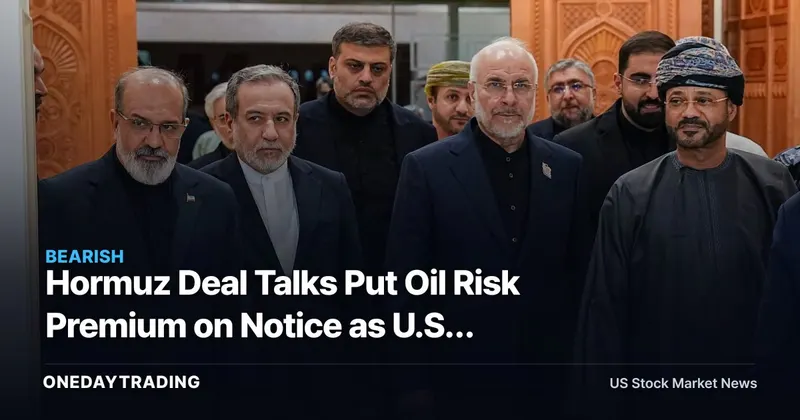
Iran Oman Hormuz deal talks matter for oil investors because CNBC says Iran and Oman are approaching an agreement to secure safe transit through the Strait of Hormuz while the U.S. holds back on secondary sanctions, lowering one geopolitical risk channel without removing the region’s policy risk.
The tape should read this as a risk-premium story, not a demand story: Exxon Mobil, Chevron, refiners and tanker-linked equities react through crude price expectations, shipping confidence and sanction-risk probabilities rather than through a change in global consumption.
The Full Story
CNBC reported in the supplied news item that Iran and Oman are approaching a deal covering safe transit through the Strait of Hormuz and future administration of the waterway. The Strait of Hormuz is the maritime chokepoint connecting Gulf energy exporters to global seaborne markets, so safe-transit language directly targets the route risk embedded in crude oil, refined products and tanker insurance.
The important phrase for markets is not only Iran and Oman; it is U.S. holds back on secondary sanctions. Secondary sanctions are restrictions aimed at third parties doing business with a sanctioned target, and U.S. restraint reduces the immediate risk that banks, shippers or commodity intermediaries face a fresh compliance shock.
Oil equities do not benefit from calmer shipping risk in a straight line. A lower Hormuz risk premium can pressure crude prices, which can weigh on upstream cash flow at Exxon Mobil and Chevron, while improving input visibility for refiners such as Valero Energy and Marathon Petroleum if feedstock supply feels less exposed.
Structural Background
Hormuz risk is a macro variable because one diplomatic headline can pass through freight rates, crude futures, inflation expectations, Treasury yields and equity multiples. Daniel Park’s desk would frame the question this way: what has already been priced is a lower probability of immediate disruption; what is not priced is whether a transit deal survives the first enforcement dispute.
The source does not provide oil prices, traffic volumes, sanction dates or company-specific exposure figures, so investors should avoid attaching false precision to the move. The cleaner read is directional: safer transit lowers supply-shock anxiety, while U.S. sanction restraint lowers the chance of an abrupt compliance freeze.
Stock & Sector Ripple
- XOM: Exxon Mobil trades through the upstream oil channel, so a smaller Hormuz risk premium can cap crude-linked upside even as calmer Gulf logistics reduce operational tail risk.
- CVX: Chevron has the same crude-price sensitivity as an integrated energy major, with the balance between lower geopolitical premium and steadier export routes driving the stock read-through.
- VLO: Valero Energy can benefit if safer Strait of Hormuz transit improves crude availability and reduces input-price spikes, though refinery margins still depend on product demand.
- MPC: Marathon Petroleum is exposed through refining economics, where lower disruption risk can help feedstock planning but can also compress inventory gains tied to rising crude.
- Energy sector: U.S. oil and refining stocks face a split signal: lower geopolitical fear is good for market stability, but not automatically bullish for crude producers.
Bull vs Bear Scenarios
The bull case for risk assets is that Iran and Oman turn safe-transit talks into a credible operating framework, while U.S. restraint on secondary sanctions keeps shipping, banking and commodity flows from freezing. In that scenario, lower energy volatility supports broader equity multiples because inflation risk looks less explosive.
The bear case is that a transit deal without tested administration is only a headline until the first vessel, insurer or enforcement case proves the mechanism works. If U.S. secondary sanctions return or Hormuz administration becomes contested, oil-price volatility can reprice quickly and leadership can swing back toward upstream producers.
Investor Action Points
- Track the next official details on how Iran and Oman define future administration of the Strait of Hormuz.
- Watch crude futures and energy-sector breadth after the CNBC-reported sanction restraint, separating oil majors from refiners.
- Check Exxon Mobil and Chevron guidance for language on geopolitical risk, realizations and Gulf logistics in the next earnings cycle.
- Check Valero Energy and Marathon Petroleum commentary for feedstock costs, refinery margins and supply reliability.
FAQ
Why do Iran Oman Hormuz deal talks matter for oil stocks?
Iran and Oman Hormuz deal talks matter for oil stocks because CNBC says the countries are nearing an agreement to secure safe transit through the Strait of Hormuz. U.S. oil producers and refiners react differently because lower route risk can reduce crude-price fear while improving supply visibility.
What is Strait of Hormuz risk for investors?
Strait of Hormuz risk is the market risk that energy flows through the Gulf waterway face disruption, higher shipping costs or sanction-linked delays. The CNBC item says Iran and Oman are approaching a safe-transit deal, which directly addresses that chokepoint risk.
How does U.S. secondary sanctions restraint affect energy markets?
U.S. secondary sanctions restraint affects energy markets by lowering the immediate compliance threat for third parties involved in trade, shipping or finance. CNBC’s supplied report says the U.S. is holding back on secondary sanctions, so the near-term shock risk is lower than it would be under an active sanctions escalation.
📊 Analysis
Signal Bearish
Why The CNBC-reported Hormuz safe-transit progress and U.S. restraint on secondary sanctions reduce the geopolitical risk premium that usually supports crude-linked energy producers.
This article was independently written by OneDayTrading from public reporting. Read the original (CNBC)