At a Glance
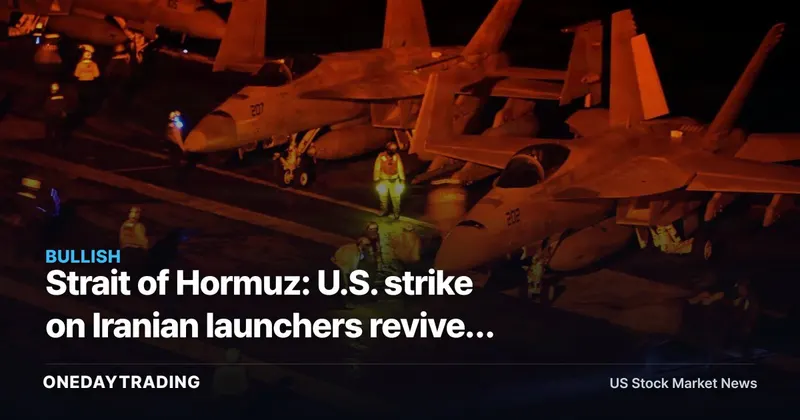
U.S. strikes on Iranian rocket launchers near the Strait of Hormuz are a near-term bullish catalyst for crude-linked assets, because the market prices disruption risk there before it prices any broader economic damage. CNBC said the latest strikes came after the last major U.S. strikes on Iran in late July, which matters because repeated action near the same chokepoint keeps a geopolitical premium alive.
The Strait of Hormuz is the maritime chokepoint where tension moves first through shipping costs, insurance, and prompt oil pricing. Investors should separate the headline from the tape: a contained strike fades fast, but any sign of retaliation near the corridor reopens the trade across energy, transport, and defense.
Why It Matters Now
For the energy complex, the first read-through is not abstract geopolitics; it is crude pricing and cash flow leverage. Exxon Mobil, Chevron, and the XLE energy ETF tend to benefit when traders lift the risk premium on supply, even if physical barrels have not yet changed hands.
The opposite channel hits fuel consumers. Delta Air Lines and United Airlines face higher jet-fuel exposure if crude and refined products reprice higher, while the broader market has to decide whether this is a one-off shock or the start of a longer retaliation cycle.
Defense names such as Lockheed Martin and RTX can trade on the headline because regional tension raises the odds of sustained military spending and replenishment demand. That support is indirect, though, and it depends on order flow and policy response, not on a single strike alone.
Key Debates
- Is the market seeing a contained warning shot, or a step toward a wider exchange near the Strait of Hormuz?
- How much geopolitical risk was already in crude after the late-July U.S. strikes on Iran?
- Do shipping insurance and freight costs stay elevated long enough to affect refined products and airline margins?
- Does the energy bid outrun the consumer-cost hit, or does the premium fade once the corridor stays open?
Related Stocks & Sectors
- XLE: the cleanest broad gauge of whether investors are buying the oil-risk trade or fading it.
- Exxon Mobil: upstream exposure gives it direct leverage to higher realized crude expectations.
- Chevron: integrated oil cash flow improves if the market keeps a risk premium on supply.
- Delta Air Lines and United Airlines: higher jet-fuel costs hit margins first, before traffic data can offset them.
- Lockheed Martin and RTX: elevated tension can support sentiment, but only sustained policy and procurement would make the move durable.
What to Watch
- Whether there are follow-on U.S. or Iranian strikes over the next few sessions.
- How crude futures respond once the first headline move is digested.
- Any rise in tanker insurance or freight pricing for Gulf routes.
- Whether officials describe the action as contained or as part of a longer campaign.
Overall Outlook
The bullish case for energy is straightforward: repeated military pressure near the Strait of Hormuz keeps supply risk in the price, and that usually favors crude-linked equities before it reaches consumers. The bearish case is just as clear: if this remains contained, the premium can unwind quickly, especially after the market already absorbed major U.S. strikes in late July.
What matters next is not the rhetoric around the strike. It is whether the corridor stays open without another escalation, because that decides whether investors are trading a short-lived headline or a fresh basis for oil, shipping, and airline valuations.
FAQ
Why do oil prices rise when the Strait of Hormuz is threatened?
The Strait of Hormuz is a chokepoint, so even the chance of disruption can push traders to pay up for crude and refined products. CNBC reported the U.S. struck Iranian rocket launchers near the strait, which keeps the market focused on retaliation risk.
Which stocks move first on Hormuz tension?
Energy names usually move first because their earnings are tied to the crude price, not to fuel consumption. Exxon Mobil, Chevron, and XLE are the cleanest U.S.-listed read-throughs, while airlines such as Delta and United face the opposite cost pressure.
Is this automatically bullish for defense stocks?
Not automatically. Lockheed Martin and RTX can gain from a stronger defense backdrop, but the durable driver is budgets and orders, not a single strike near Iran. The headline helps sentiment; the backlog has to confirm it.
📊 Analysis
Signal Bullish
Why The strike near the Strait of Hormuz raises crude risk premia and supports energy equities, even though airlines and other fuel users face the opposite pressure.
Tickers$XLE$XOM$CVX$DAL$UAL$LMT
This article was independently written by OneDayTrading from public reporting. Read the original (CNBC)