Summary
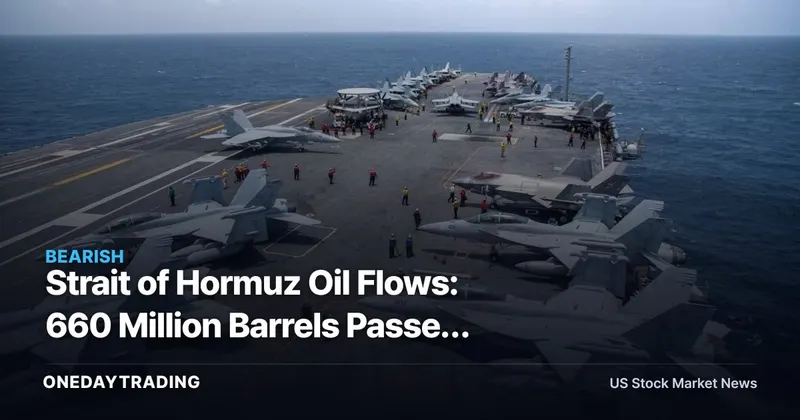
Strait of Hormuz oil flows look more resilient than the risk premium often implies because CNBC reported that the U.S. military aided the passage of 660 million barrels of oil through the waterway since May, even as the security situation remained contested.
For investors in crude oil, Exxon Mobil, Chevron, refiners and energy ETFs, the takeaway is not that geopolitical risk has disappeared; the point is that actual barrels have kept moving through a chokepoint the market cannot ignore.
The Full Story
CNBC reported that the U.S. military said it helped oil move through the Strait of Hormuz, with 660 million barrels passing through the strait since May while the security situation remained contested. That single figure matters because crude prices respond less to headlines than to whether physical supply is delayed, rerouted or removed from the market.
The Strait of Hormuz is a narrow maritime chokepoint linking the Persian Gulf to global oil markets, and disruptions there can affect crude benchmarks, tanker routes, insurance costs and refining margins. The source report gives investors one hard supply-flow number, not a price forecast: 660 million barrels moved with U.S. support since May.
The tape can price a risk premium for a contested security environment, but the tape also has to respect throughput. If oil keeps clearing the Strait of Hormuz, the immediate upside case for crude depends on sustained fear rather than confirmed lost barrels.
Structural Background
Energy markets separate threat from interruption. A contested waterway raises the probability of higher freight, security and insurance costs, but crude prices usually need evidence of blocked cargoes or reduced export availability to hold a lasting geopolitical premium.
U.S. military assistance changes the market channel from pure disruption risk to managed-transit risk. That distinction matters for equity investors because producers benefit most from higher realized crude prices, while refiners and oil-consuming sectors are more sensitive to feedstock costs and supply reliability.
Stock & Sector Ripple
- Exxon Mobil XOM: Exxon Mobil stock is tied to crude-price expectations, so uninterrupted Strait of Hormuz flows can limit the upside from geopolitical risk unless benchmark oil prices rise on confirmed supply loss.
- Chevron CVX: Chevron shares face the same crude-beta tradeoff as Exxon Mobil, with the source-reported 660 million barrels since May arguing for supply continuity rather than an immediate shock.
- ConocoPhillips COP: ConocoPhillips has more direct sensitivity to upstream oil pricing, so a smaller risk premium can weigh on the stock even when operational exposure is not the news event.
- Valero Energy VLO: Valero Energy can benefit if crude supply stays available and feedstock spikes are contained, though contested shipping conditions can still pressure costs.
- Marathon Petroleum MPC: Marathon Petroleum investors should watch whether stable oil passage protects refining economics or whether security-related logistics costs offset the benefit.
Bull vs Bear Scenarios
The bull case for oil prices is simple: CNBC described the Strait of Hormuz security situation as contested, and any verified interruption after 660 million barrels moved since May would force traders to reprice supply risk quickly. The bear case is equally concrete: U.S.-aided passage has kept barrels moving, so crude needs a fresh disruption signal to justify a larger geopolitical premium.
For energy equities, that makes the setup mixed rather than one-way. Integrated oil producers need higher crude realizations to outperform on this story, while refiners need continued physical availability and manageable transport costs.
Investor Action Points
- Track whether official or reported Strait of Hormuz flow data changes from the 660 million barrels cited by CNBC since May.
- Watch WTI crude CL=F and Brent price action around fresh security headlines, because price confirmation matters more than headline volume.
- Review next earnings calls from Exxon Mobil XOM, Chevron CVX and ConocoPhillips COP for language on realized crude pricing and geopolitical risk.
- Check Valero Energy VLO and Marathon Petroleum MPC commentary for feedstock cost, logistics cost and margin sensitivity.
FAQ
Why does Strait of Hormuz oil flow matter for investors?
Strait of Hormuz oil flow matters because CNBC reported that 660 million barrels passed through the strait since May with U.S. military assistance. That volume gives investors a real supply benchmark for judging whether crude oil risk is being priced on disruption or fear.
Did the U.S. military keep oil moving through the Strait of Hormuz?
CNBC reported that the U.S. military said it aided the passage of 660 million barrels of oil through the Strait of Hormuz since May. The same CNBC report said the security situation in Hormuz remained contested.
What stocks are affected by Strait of Hormuz oil risk?
Exxon Mobil XOM, Chevron CVX and ConocoPhillips COP are affected because crude-price expectations influence upstream energy earnings. Valero Energy VLO and Marathon Petroleum MPC are affected because refiners depend on available crude supply and manageable input costs.
📊 Analysis
Signal Bearish
Why The report points to continued oil passage through a contested chokepoint, which undercuts the immediate crude-risk premium unless actual supply disruption emerges.
Tickers$XOM$CVX$COP$VLO$MPC
This article was independently written by OneDayTrading from public reporting. Read the original (CNBC)