At a Glance
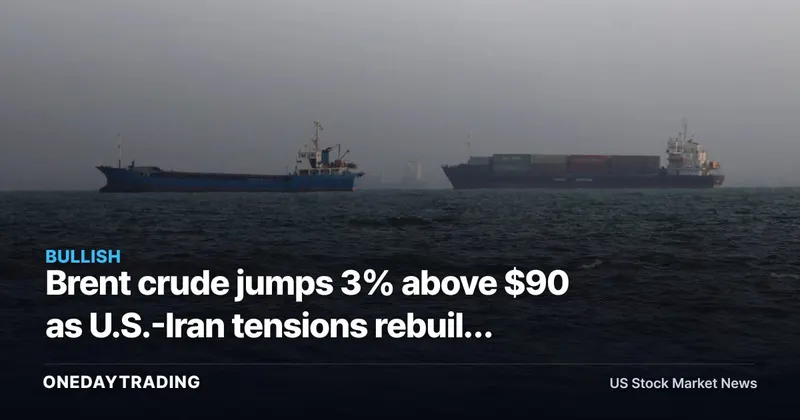
Brent crude jumped 3% above $90 a barrel on Monday after the U.S. struck Iranian targets for the first time in weeks, and that is less a one-day oil spike than a repricing of geopolitical risk. Brent crude is the global benchmark for seaborne oil pricing, so the market is asking whether the move reflects real supply danger or just a faster rebuild of the risk premium.
For investors, the first-order trade is straightforward: higher crude supports upstream energy cash flow and service demand, while airlines, transport names and other fuel users face immediate margin pressure. The second-order question is harder and more important: if the U.S.-Iran flare-up does not threaten physical flows, part of the 3% move can fade as quickly as it arrived.
Why did Brent crude jump above $90?
Brent crude rose because traders reacted to a new escalation in U.S.-Iran hostilities, not because the market suddenly discovered stronger end-demand. When the catalyst is geopolitical, prices tend to move on the probability of disruption rather than on present barrels lost, which is why the tape can outrun the physical evidence.
The fact that Brent crude cleared $90 matters because round numbers often become positioning levels. Above that line, the market is signaling that it is willing to pay for insurance against a wider conflict, but it is not yet proving that global supply has changed.
Key Debates
- Is this a lasting supply-risk premium or a headline-driven surge that unwinds once the immediate response passes?
- Do higher crude prices translate into better economics for integrated producers, or do they simply offset weaker downstream margins?
- How much of the move is already priced after Monday's 3% jump, and how much needs a fresh escalation to extend?
- Can Brent crude hold above $90 if traders conclude the strikes do not threaten Gulf flows or export routes?
What does a higher oil risk premium mean for U.S. stocks?
- Exxon Mobil and Chevron usually benefit first because higher Brent raises upstream revenue and supports cash generation across their portfolios.
- Oilfield names such as SLB can gain if the price move keeps operators willing to spend on drilling, completions and maintenance.
- Airlines such as Delta and United typically face the opposite effect because jet fuel is one of their largest variable costs.
- Refiners can see mixed pressure: crude feedstock costs rise fast, while product prices only help if demand is strong enough to pass the increase through.
What to Watch
- Whether Brent crude holds above $90 through the next session, or slips back once the initial shock is digested.
- Any new U.S. or Iranian response that changes the odds of a broader supply disruption.
- Follow-through in energy stocks versus airlines and transport names, which will show whether investors are treating this as a commodity move or a broader risk-off event.
- Price action in the next few trading days, which will reveal whether the market is pricing a temporary premium or a deeper regime shift.
Overall Outlook
The bullish case for energy is simple: if tensions stay elevated, Brent crude can keep a geopolitical bid, and that supports producer margins and service spending. The bearish case for the move is just as clean: if the conflict does not touch actual supply, traders usually strip out the premium once the news flow cools.
That is why the important variable is not the 3% jump by itself but whether Brent can stay above $90 after the first round of reactions. If it cannot, the market was trading fear; if it can, investors are starting to price a more durable oil shock.
FAQ
Why did Brent crude rise today?
Brent crude rose 3% above $90 on Monday after the U.S. struck Iranian targets for the first time in weeks. The move reflects a higher geopolitical risk premium, not a confirmed loss of supply.
Which stocks benefit when Brent crude moves higher?
Exxon Mobil, Chevron and oilfield service names such as SLB generally benefit first because higher Brent crude improves revenue and cash generation for upstream activity. Fuel-sensitive sectors such as airlines usually face the opposite pressure because their input costs rise faster than they can reprice seats.
What level matters next for Brent crude?
Brent crude above $90 is the key marker from this move, because it shows traders are still paying for conflict risk. If Brent crude falls back below that level after the first headlines, the market is likely treating the jump as a short-lived premium rather than a lasting shock.
📊 Analysis
Signal Bullish
Why Brent crude's 3% move above $90 lifts upstream energy cash flow and supports service spending, even as it hits fuel-intensive sectors.
This article was independently written by OneDayTrading from public reporting. Read the original (CNBC)