August’s Pay Squeeze Reaches Retail Demand
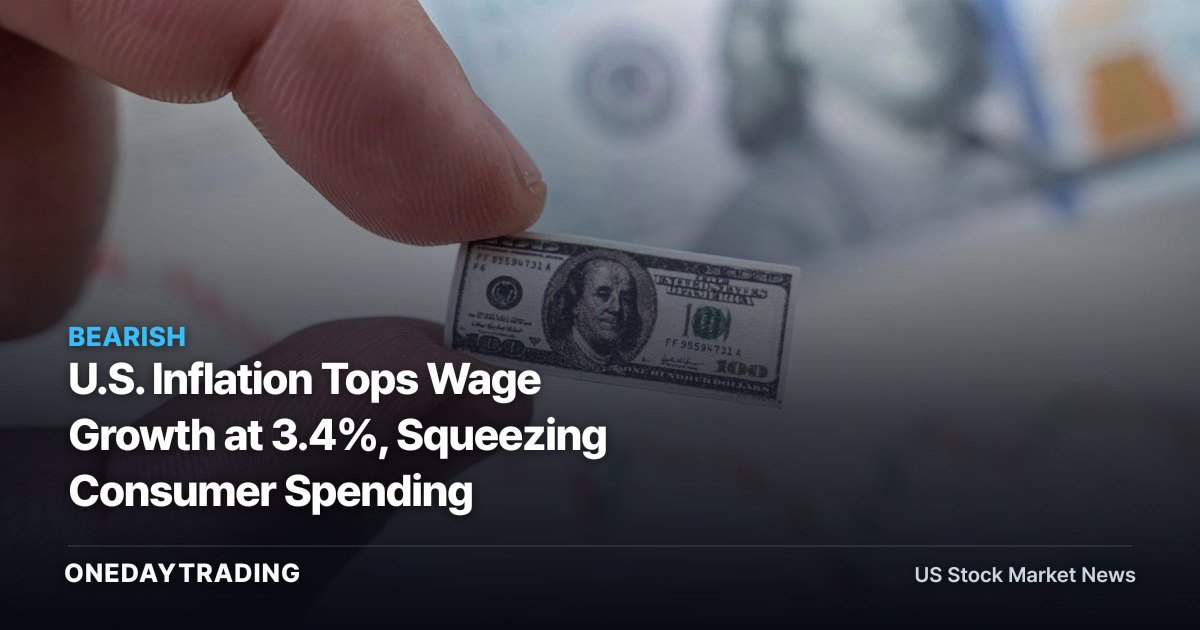
Costco and Walmart sit on the front line of a U.S. purchasing-power squeeze: consumer prices rose 3.4% year over year in August while average hourly earnings increased 3.1%. The result is a negative income signal for consumer-facing businesses, because households have less real buying power even before they alter where they shop. For investors, the key issue is not simply the inflation rate; it is whether weaker real pay changes the mix, frequency and value of consumer spending.
The figures were reported by CNBC Markets from separate Friday releases by the U.S. Bureau of Labor Statistics. Real average hourly earnings, which adjust pay for inflation, fell 0.1% from July and declined 0.3% from a year earlier in August. That measure translates the headline gap into the household budget: nominal wages rose, but prices rose faster.
Energy Costs Reopened the Inflation-Wage Gap
Gasoline prices rose 3.9% in August and accounted for more than one-third of the consumer price index’s gain. Diesel reached $6 per gallon on Friday for the first time amid fuel supply disruptions. The exact causes and duration of those disruptions are not established in the available facts, but the transmission mechanism is direct: fuel takes a larger share of household and transport budgets, leaving less room for discretionary purchases.
Navy Federal Credit Union had previously estimated that gasoline prices jumped 21% in March. Heather Long, its chief economist, described April as the turning point after a period beginning in May 2023 when wage growth had generally exceeded inflation. Her assessment is that the earlier improvement has reversed, leaving households exposed to renewed price pressure while wage growth slows.
Long said, “The basics are that inflation is wiping out wage gains.” She also warned that “It’s going to be tough for a long time.” Her comments are an interpretation of the data, not a forecast with a fixed outcome. The source does not establish the precise path of fuel prices or the exact calendar dates for the August measurements.
Why the Shopper Mix Matters for Costco and Walmart
Consumer spending represents roughly two-thirds of U.S. economic activity, so a broad pullback can matter beyond individual retailers. Long expects households to become more cautious as paychecks buy less. That caution does not necessarily mean spending stops; it can mean trading down, buying in larger quantities, or shifting purchases toward stores perceived to offer better value.
YouGov data shows that higher-income shoppers are more likely to shop at Costco, while Walmart Supercenter is preferred by middle- to lower-income households. Navy Federal’s internal spending data, covering about 15 million members, points to a similar movement toward warehouses and discount stores. Long summarized the behavior this way: “People who used to shop at Whole Foods are now at Costco, Aldi.”
For Costco, the potential support comes from a value proposition that can attract shoppers reallocating grocery budgets toward warehouse purchases. The risk is that a more defensive customer becomes selective about membership, basket size or discretionary items. Walmart’s exposure is different: its stated preference among middle- to lower-income households places it closer to the consumers most immediately affected by negative real earnings, which could support traffic while intensifying pressure to keep prices competitive.
Market and Stock Impact
- Costco (COST): The reported shift from Whole Foods toward Costco and warehouse shopping could support traffic and grocery demand as households stretch each dollar. The counter-risk is mix: value-seeking behavior may favor necessities over higher-margin discretionary merchandise.
- Walmart (WMT): YouGov identifies Walmart Supercenter as the preferred grocery store for middle- to lower-income households. That positioning may help preserve visits during a pay squeeze, but a customer base under pressure can also make price investment and margin protection more difficult.
- Consumer sector: The 0.3% year-over-year decline in real average hourly earnings is a demand warning. Because spending is roughly two-thirds of U.S. economic activity, a prolonged reduction in purchasing power could weigh on retailers whose sales depend on discretionary budgets, even if value-oriented formats gain share.
- Fuel-sensitive businesses: Gasoline’s 3.9% August increase and diesel at $6 per gallon raise the cost pressure facing households and transportation activity. The source does not provide company-level fuel exposure, so the effect on any particular stock cannot be quantified here.
Investor Checkpoints for the Next Read
- Real earnings: Track whether real average hourly earnings continue to fall from the August levels of down 0.1% month over month and down 0.3% year over year. A reversal would ease the direct purchasing-power pressure; another decline would reinforce the trade-down mechanism.
- Fuel prices: Watch gasoline after its 3.9% August increase and diesel after Friday’s $6-per-gallon reading. The available facts do not specify how long supply disruptions will last, making fuel persistence a central variable.
- Retail mix: In company updates, separate traffic and grocery demand from discretionary basket behavior. The reported movement toward Costco, Walmart Supercenter and Aldi suggests that channel share and product mix may matter as much as total spending.
- Inflation-wage convergence: Long believes wage growth and inflation could converge around the beginning of 2027, but whether that occurs is unknown. Investors should treat that as a conditional scenario and compare each new inflation and earnings release against the August gap.
What Could Break the Bearish Read
The constructive case for retail stocks is that households remain active but redirect spending toward value. Costco could benefit from warehouse substitution, while Walmart could retain traffic among shoppers with less income flexibility. That scenario would make channel positioning more important than a simple economy-wide spending decline.
The bearish case is a longer period in which prices continue to outrun pay. Long said convergence between wage growth and inflation would still feel “pretty miserable on Main Street” if it merely brought wages and prices to the same growth rate. In that setting, retailers may see resilient visits but weaker discretionary demand, heavier value competition and less room to pass through costs.
The next decision point is the sequence of new inflation, wage and real-earnings readings. Until those data show whether August was a temporary setback or a sustained reversal, the clearest market signal is the behavior already visible in the facts: purchasing power fell, fuel costs rose and shoppers are reallocating toward value.
📊 Analysis
Signal Bearish
Why Falling real earnings and higher fuel costs point to weaker purchasing power and more cautious consumer spending.
This article was independently written by OneDayTrading from public reporting. Read the original (CNBC Markets)